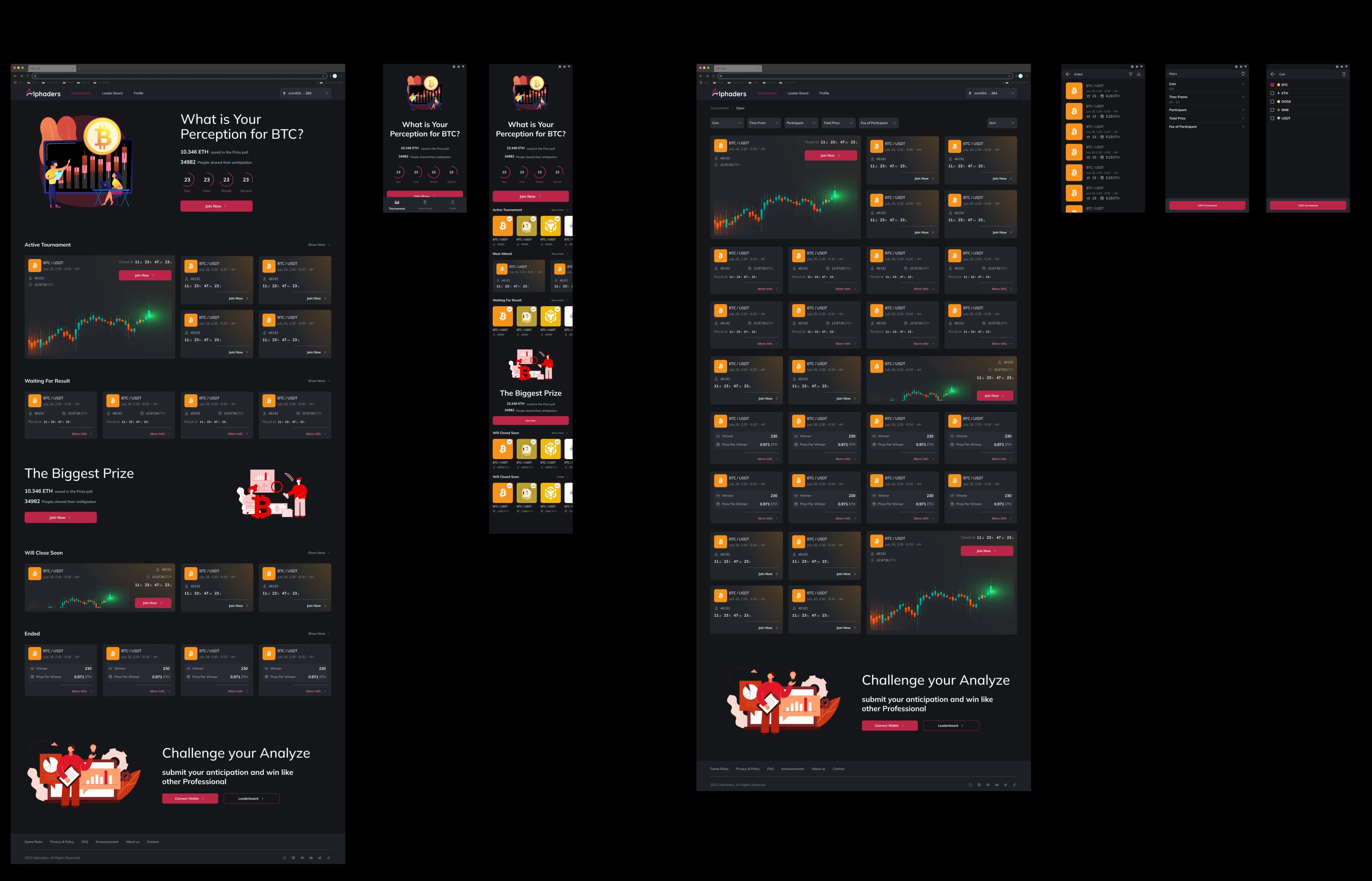
Alphaders: Web3 Crypto Price Prediction Platform
Designed a blockchain-based competition platform where users predict cryptocurrency price movements, participating through Web3 wallets for prize pools. The platform focused on short-term price predictions for BTC and ETH across different timeframes.
Key Features:
- Cryptocurrency price prediction contests
- MetaMask wallet integration
- Multiple timeframe options (1h, 4h, daily)
- Automated prize distribution
- Winner selection within 1% accuracy
Platform Mechanics:
- Users connect Web3 wallets
- Pay entry fee for competitions
- Submit price predictions
- Automated winner verification
- Smart contract prize distribution"
Would you like to explore:
- The design process and challenges
- User experience considerations for Web3
- How you approached wallet integration
- Competition interface design?
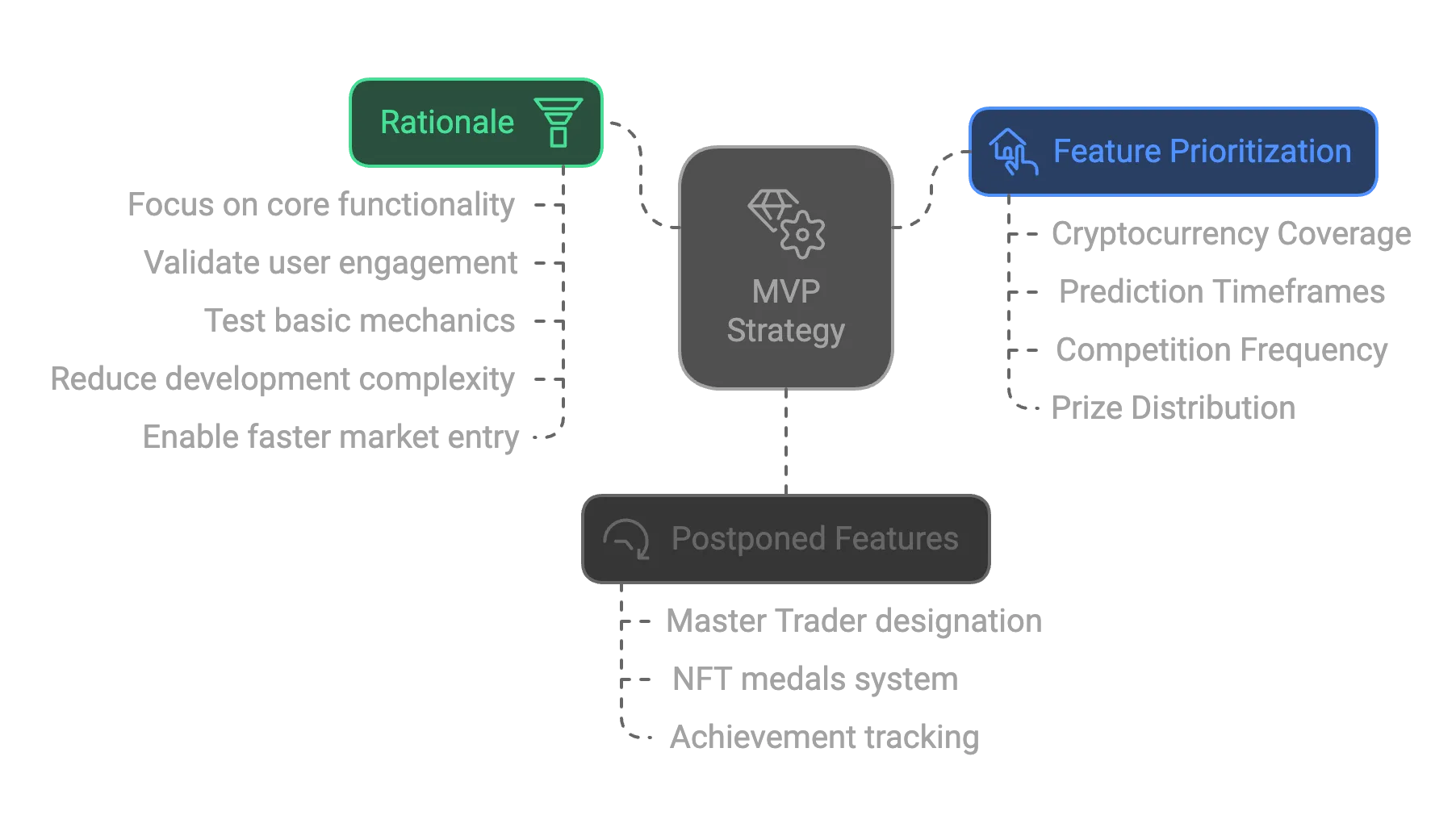
MVP Strategy: Focusing on Core Value

Initial stakeholder discussions revealed ambitious platform goals. Recommended strategic MVP approach to validate core concepts:
Feature Prioritization:
Original Vision vs. MVP:
- Cryptocurrency Coverage
- Full Vision: Multiple cryptocurrencies
- MVP: Bitcoin only
- Prediction Timeframes
- Full Vision: 1h, 4h, daily, weekly, monthly
- MVP: 4h candles only
- Competition Frequency
- Full Vision: 20+ daily competitions per coin
- MVP: Single daily competition
- Prize Distribution
- Full Vision: Automated withdrawals
- MVP: Manual request-based withdrawal
Features Postponed:
- Master Trader designation
- NFT medals system
- Achievement tracking
Rationale:
- Focus on core functionality
- Validate user engagement
- Test basic mechanics
- Reduce development complexity
- Enable faster market entry
Wireframe Development: Building for Now and Future
Created foundational wireframes focusing on five key pages while ensuring scalability for future features:
Core Pages Design:
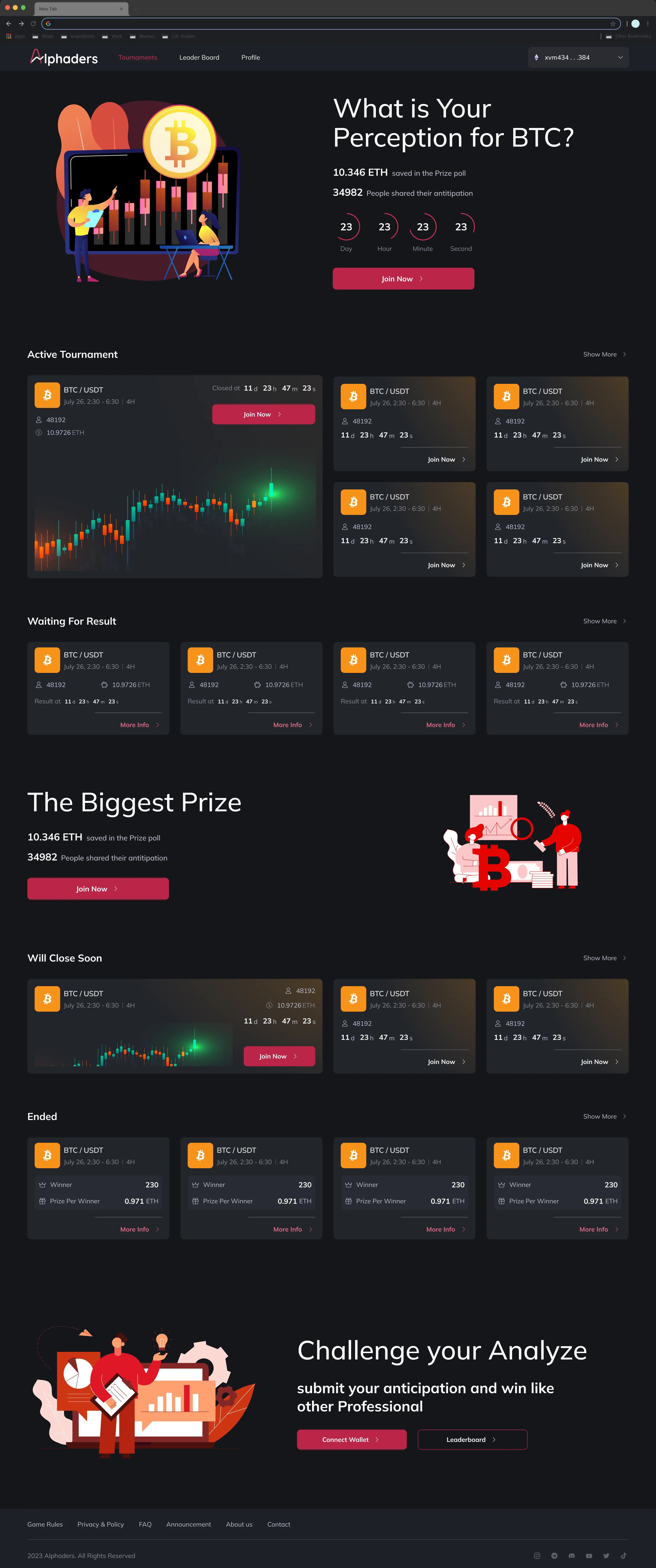
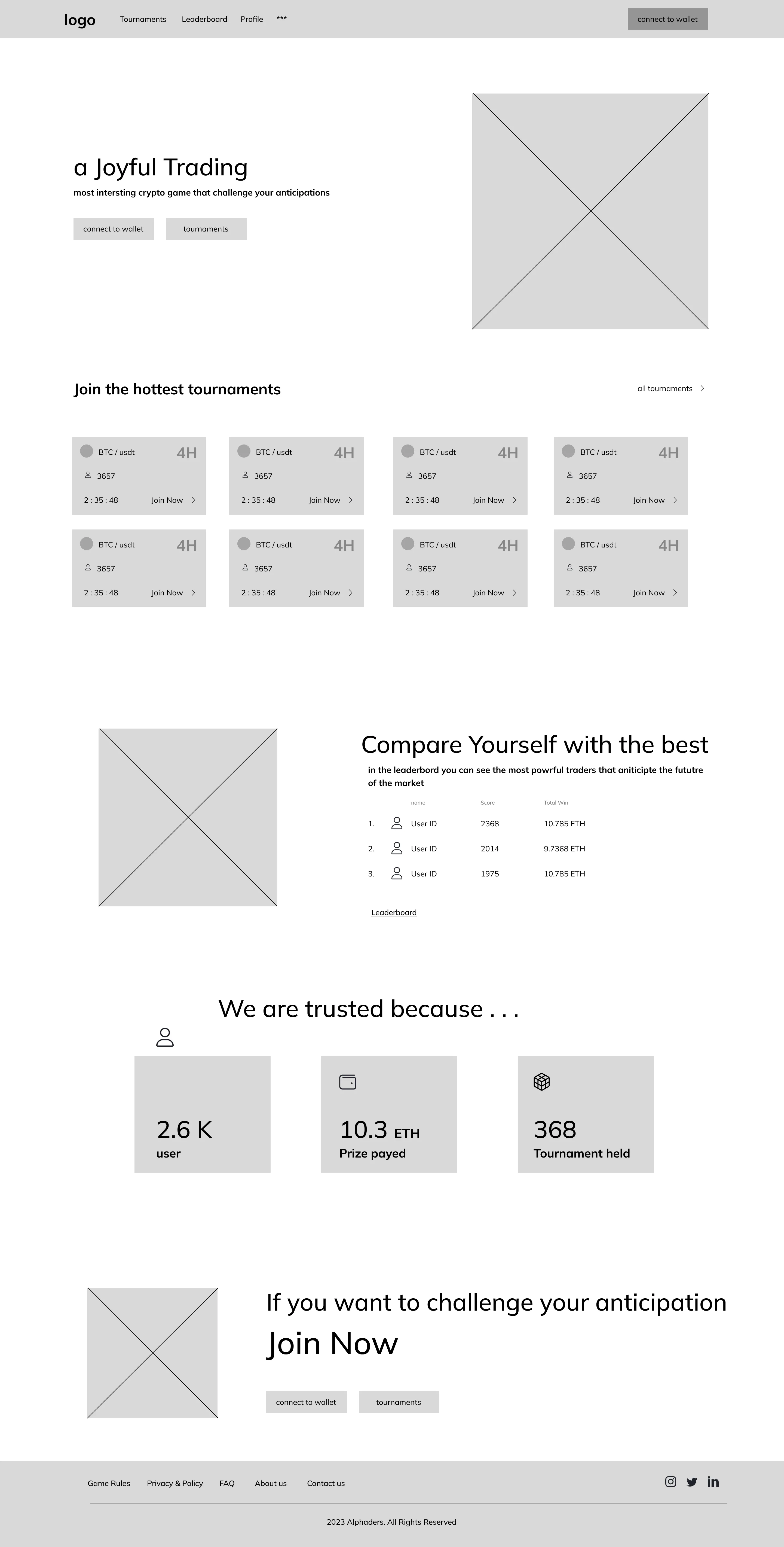
- Home Page
- Platform introduction
- Key features showcase
- Current tournaments highlight
- Wallet connection integration
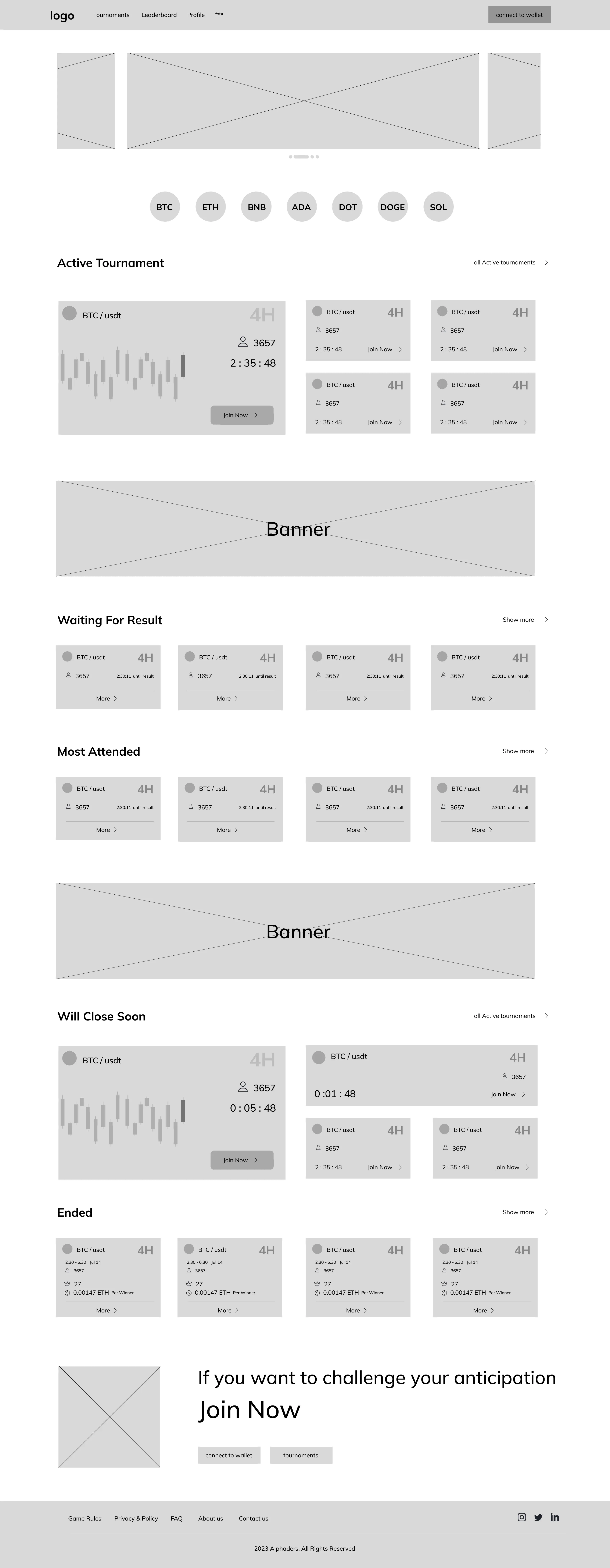
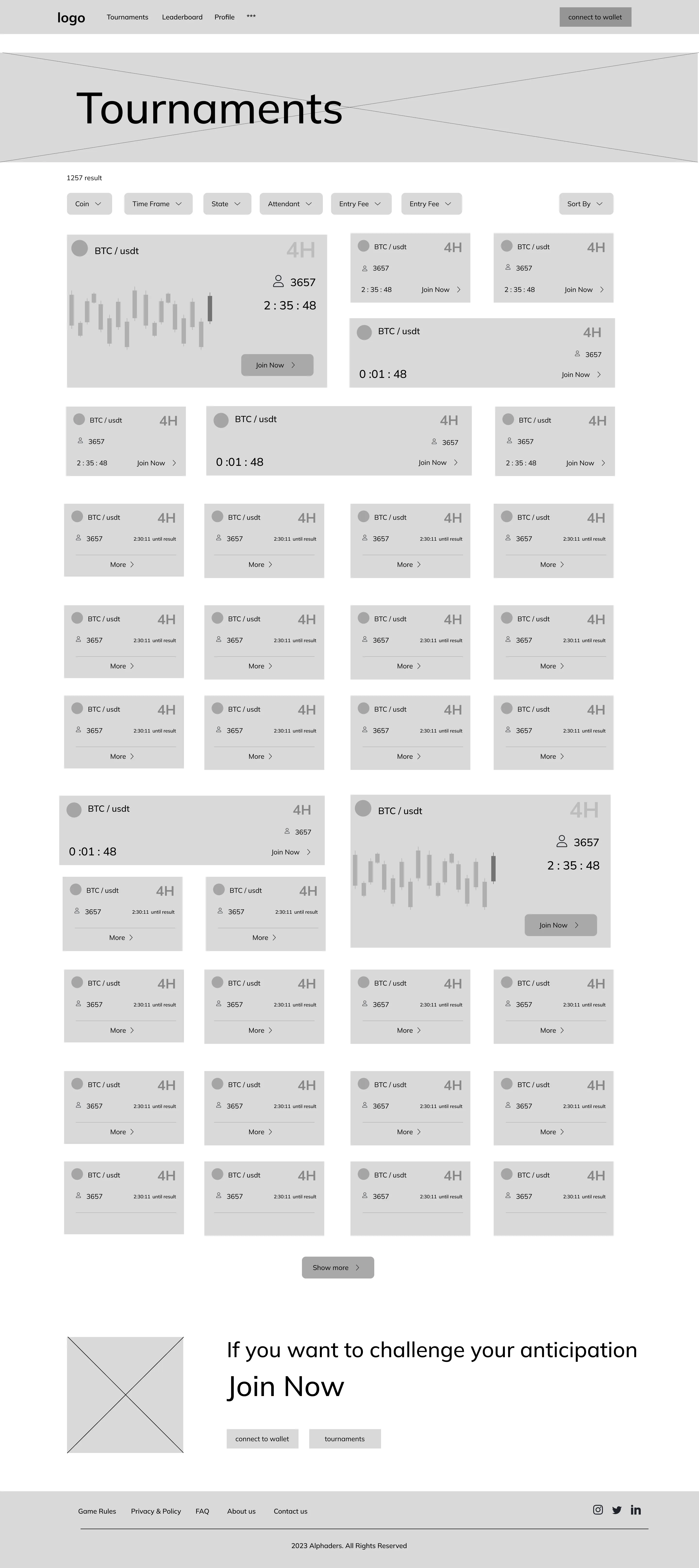
- Tournament List
- Active competitions display
- Entry fee information
- Time remaining indicators
- Participation status
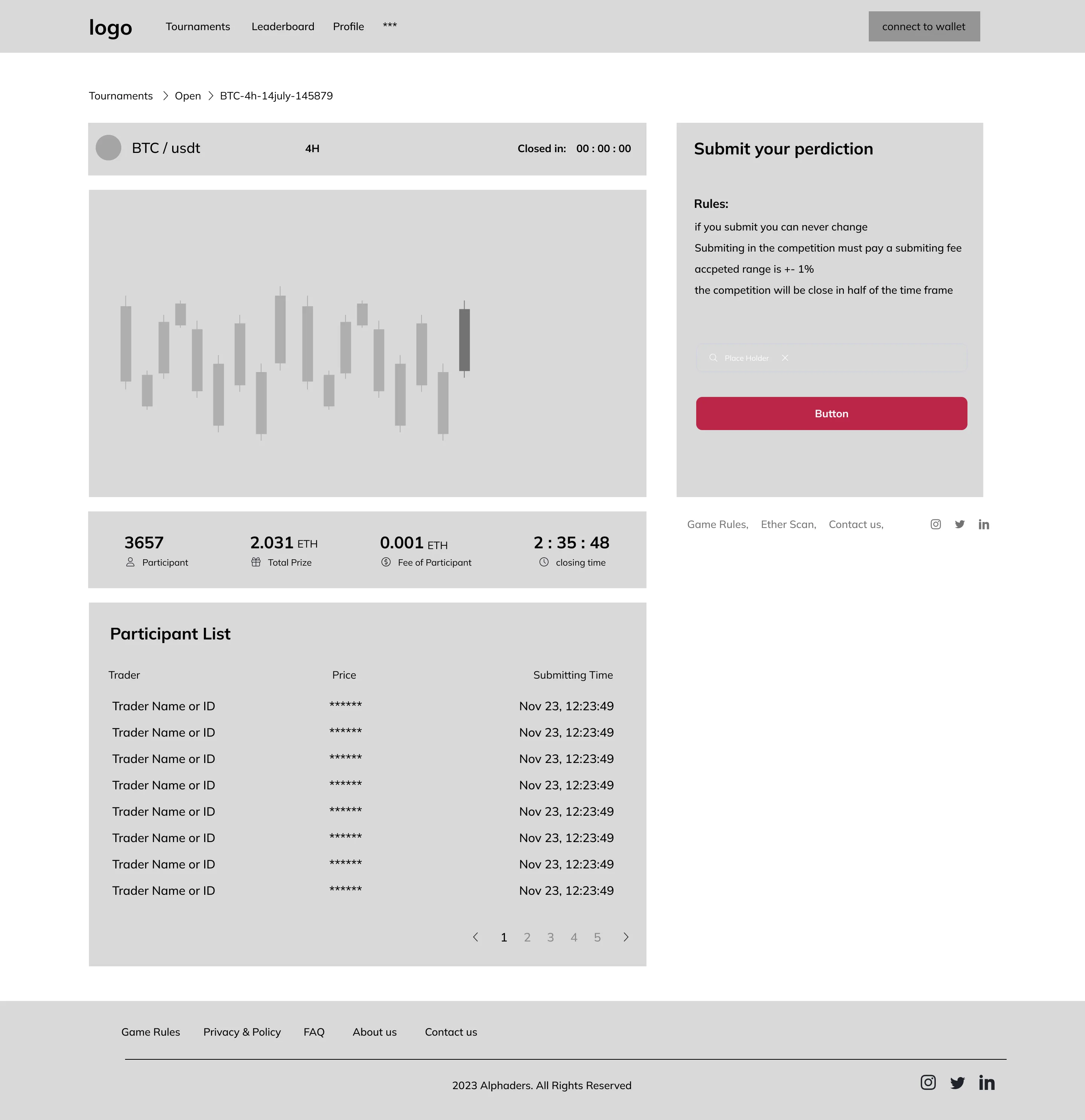
- Tournament Detail
- Price prediction interface
- Competition rules
- Prize pool information
- Participation mechanics
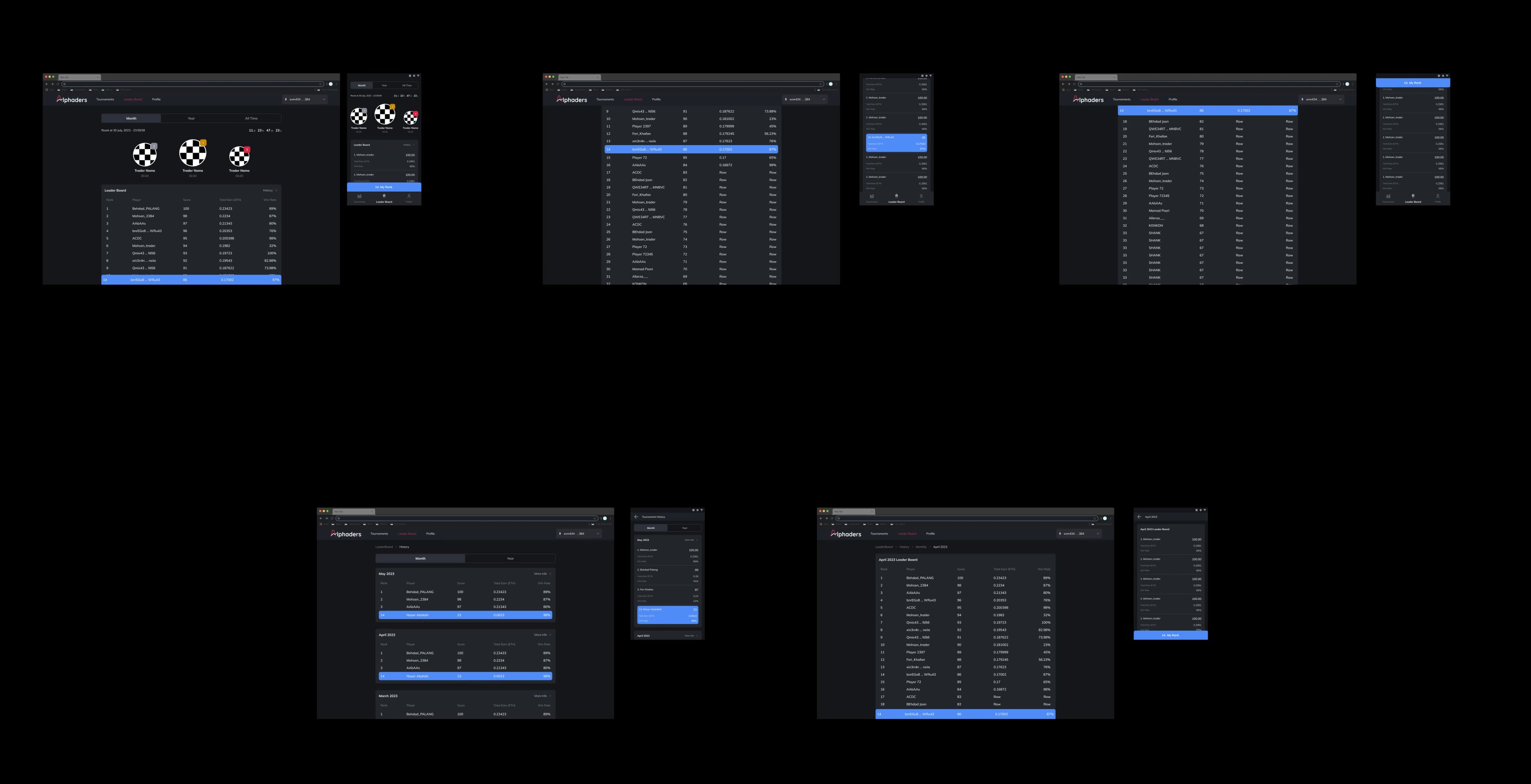
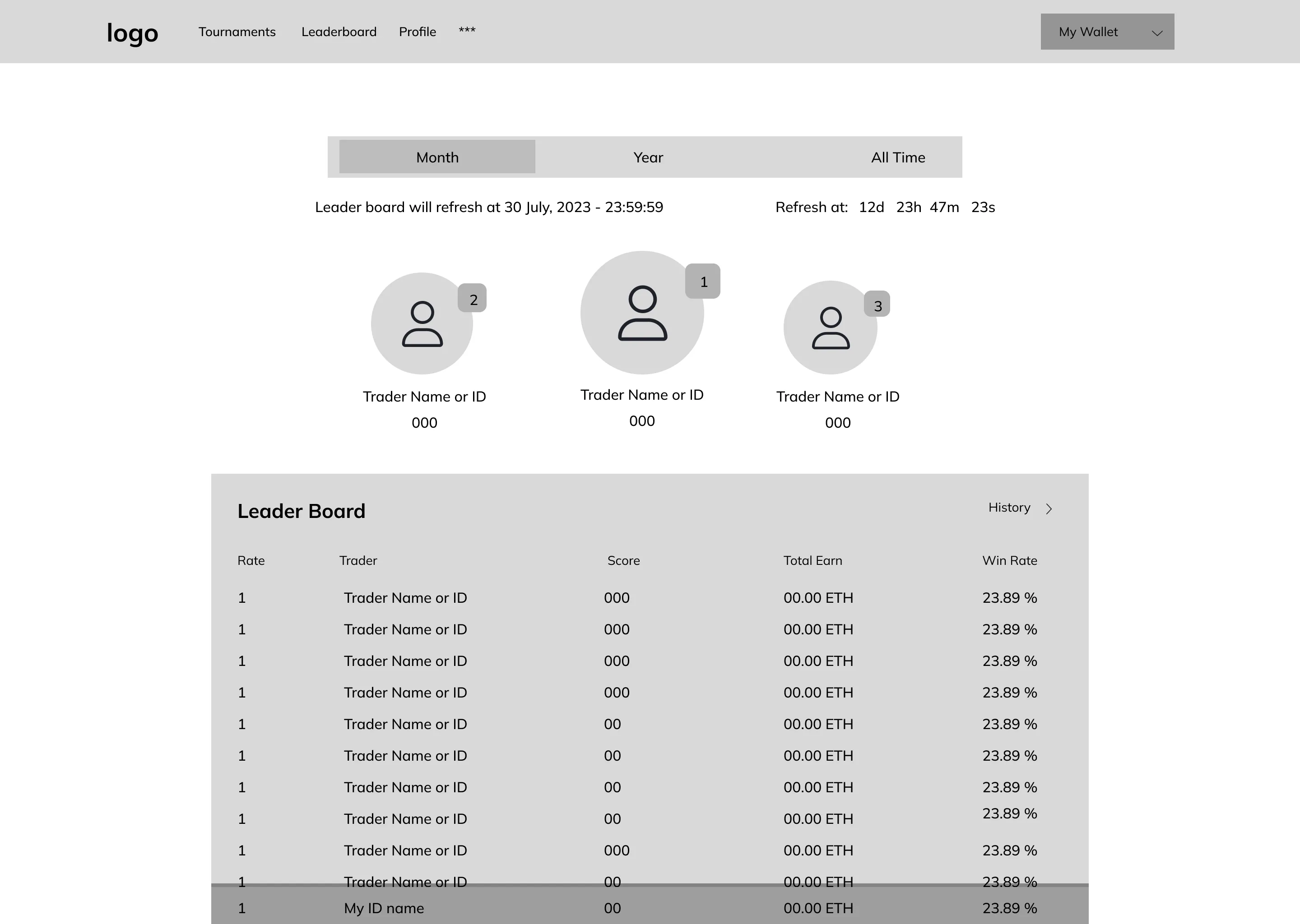
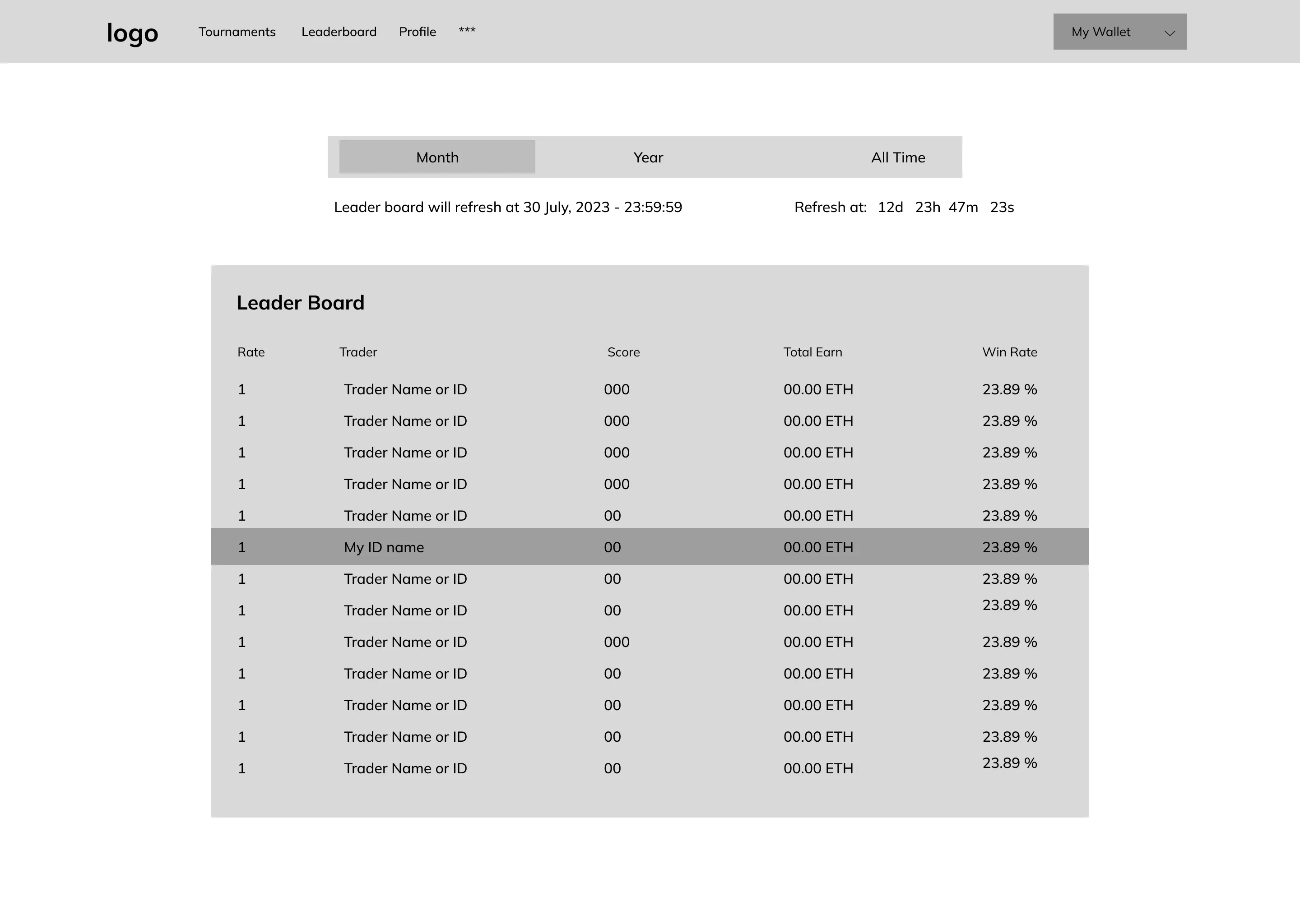
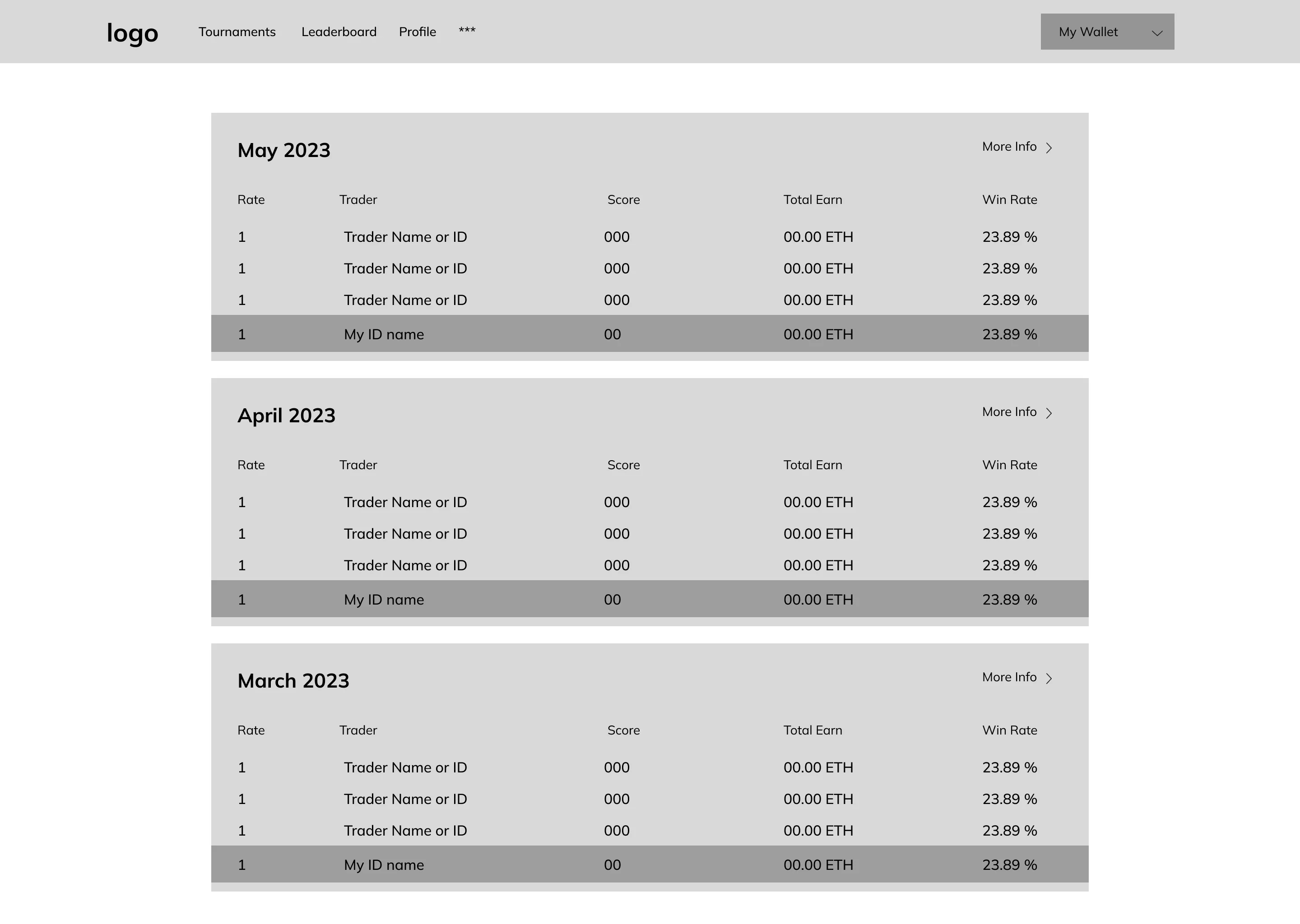
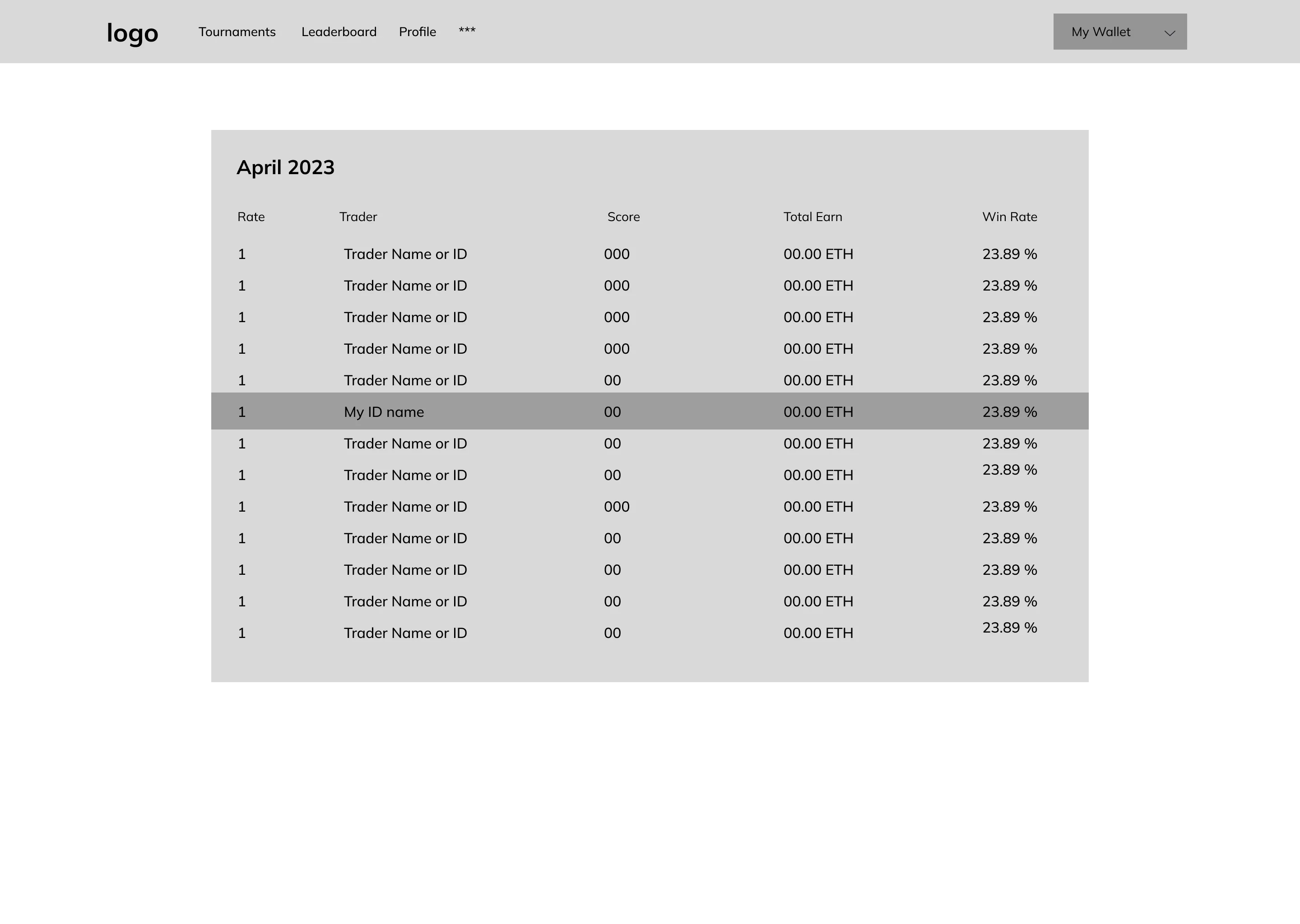
- Leaderboard
- Winner rankings
- Prize distribution details
- Performance metrics
- Historical results
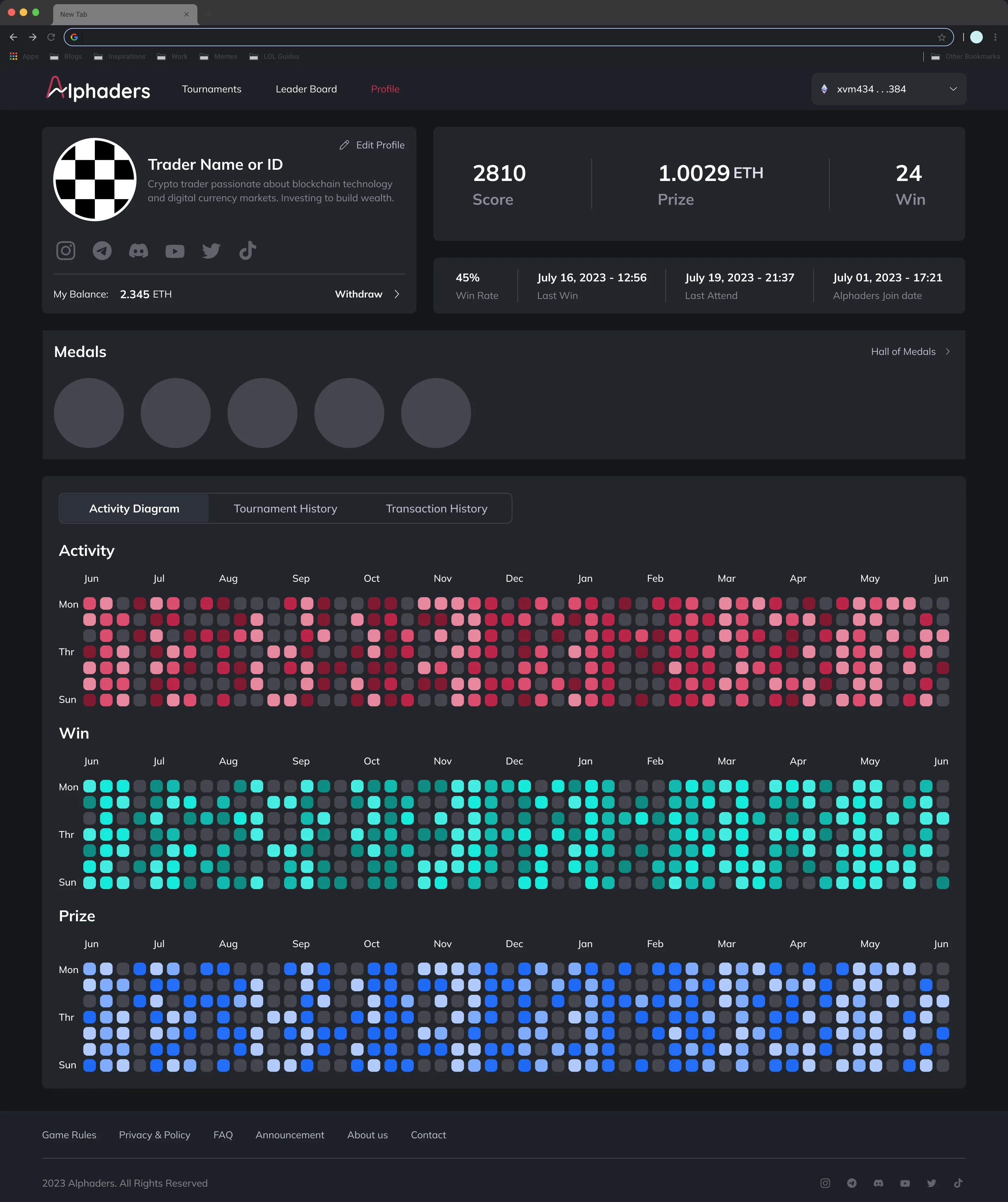
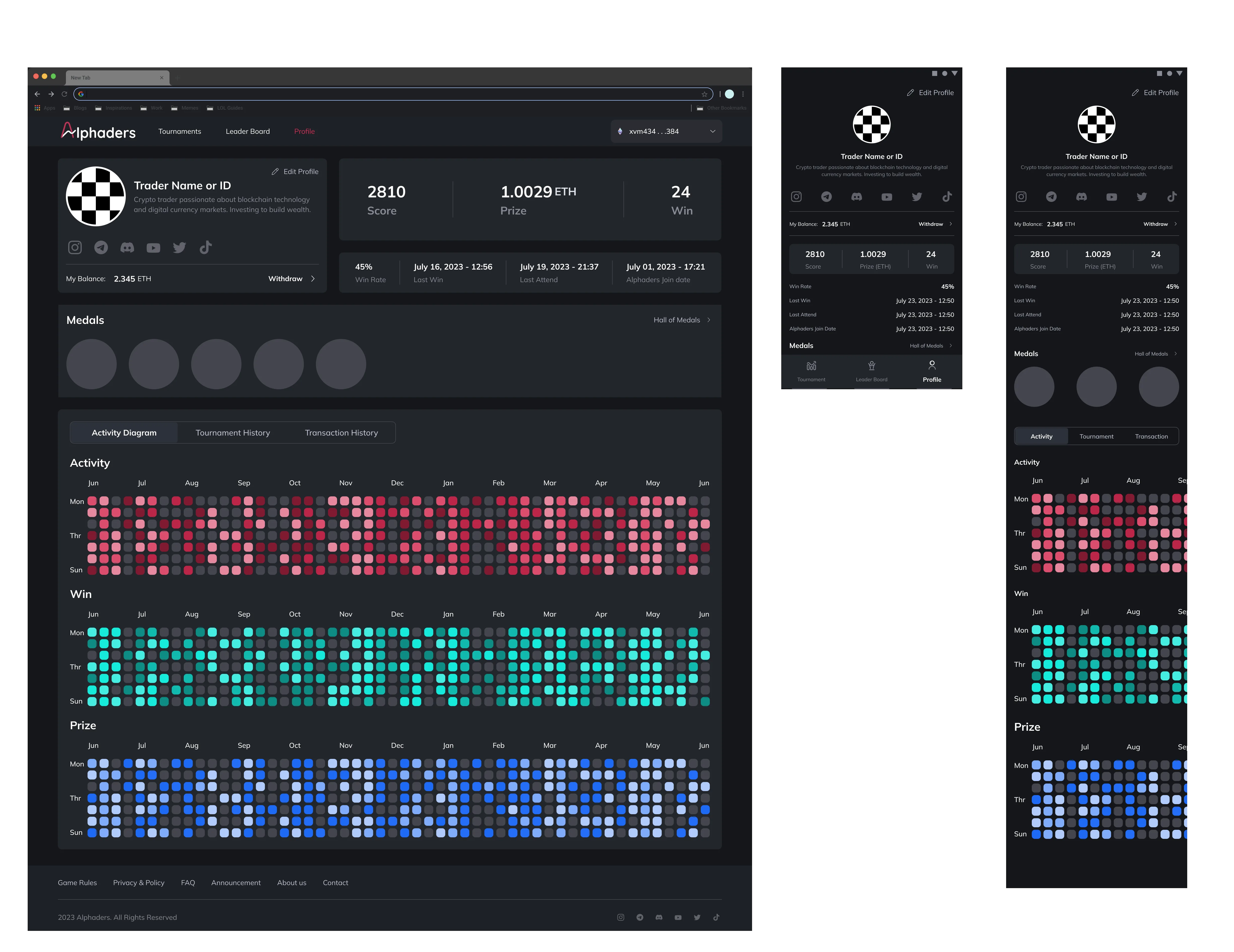
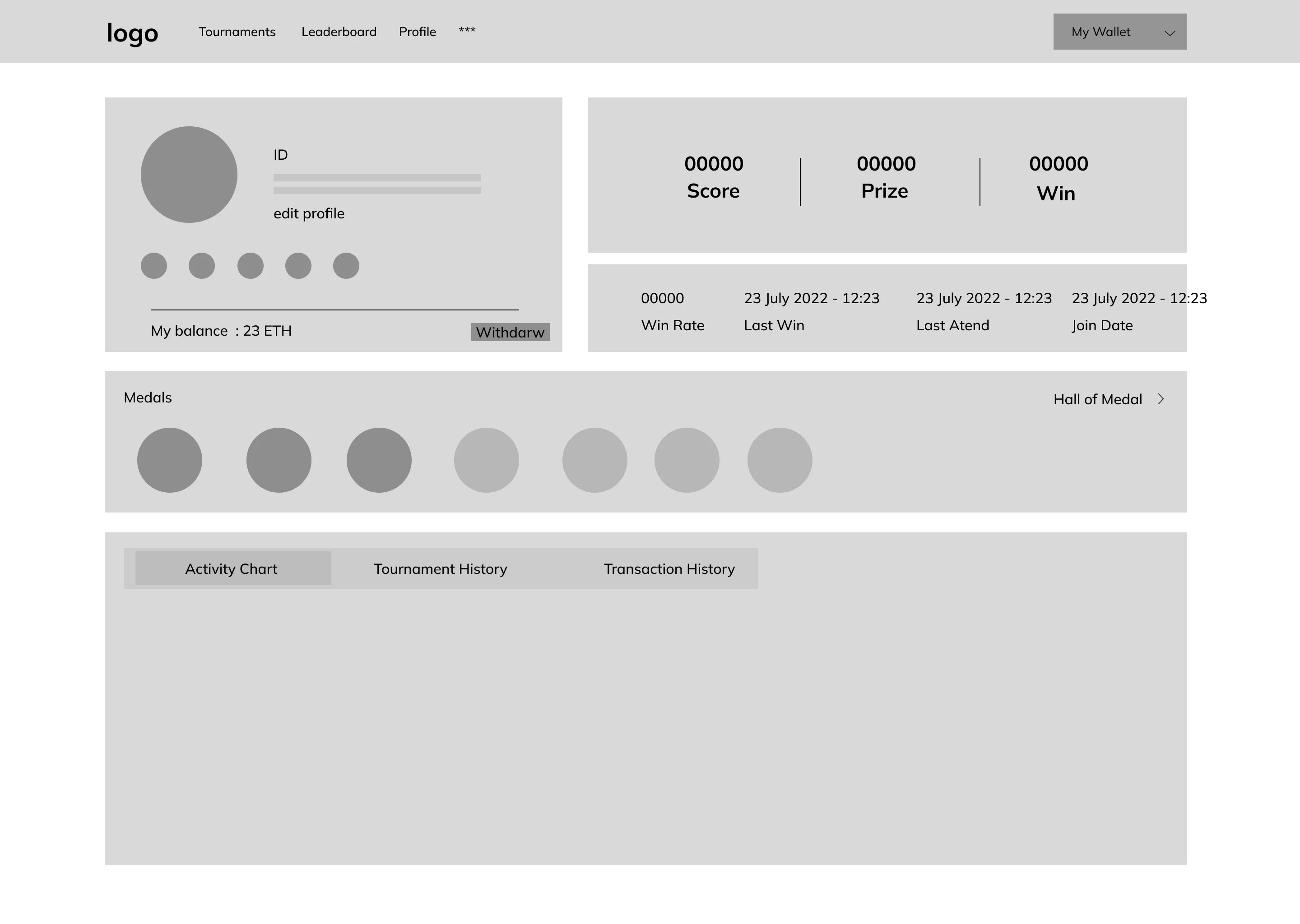
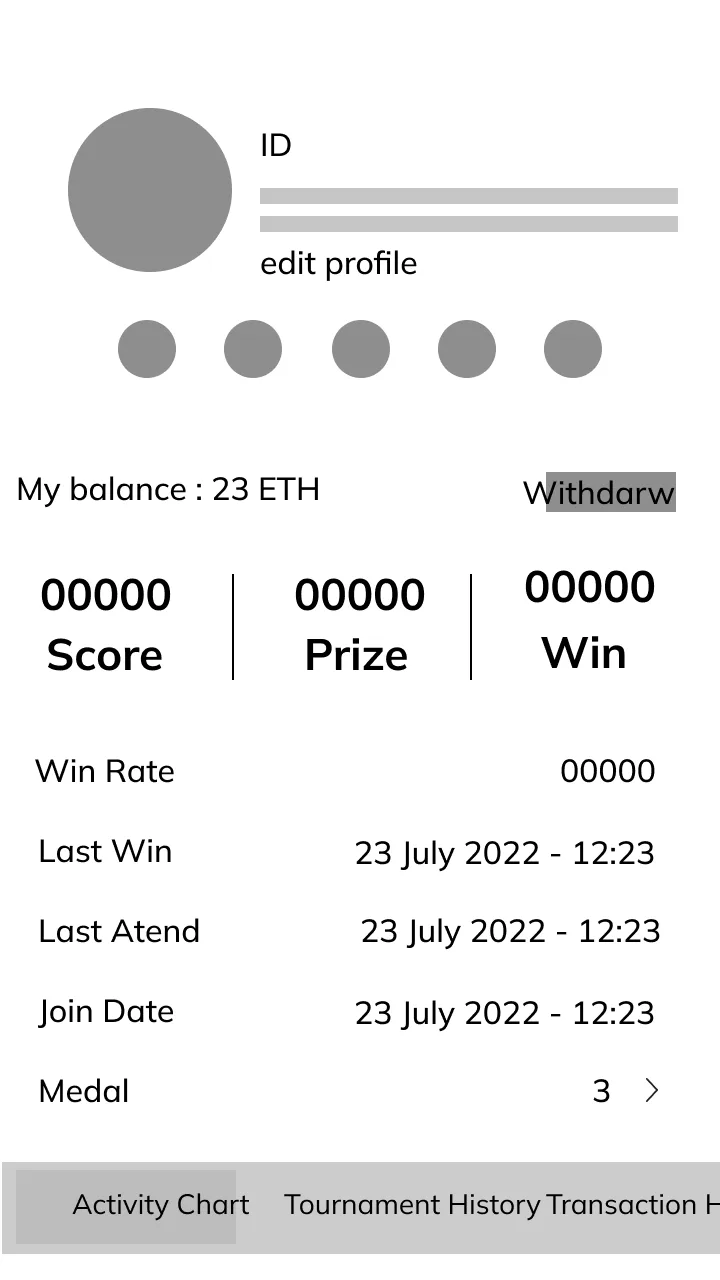
- Profile Dashboard
- User statistics
- Participation history
- Wallet integration
- Withdrawal interface
Design System Development: From Foundation to Components
Established a comprehensive design system starting with fundamental elements:
Color Architecture:
- Primary Colors: 10-90 shade range
- Semantic Colors: 10-50 shade range
- Surface Neutrals: 5 variations
- Grey Scale: 10-90 shade range
- Dual Theme Support: Light/Dark
- Static Colors: Theme-independent black/white
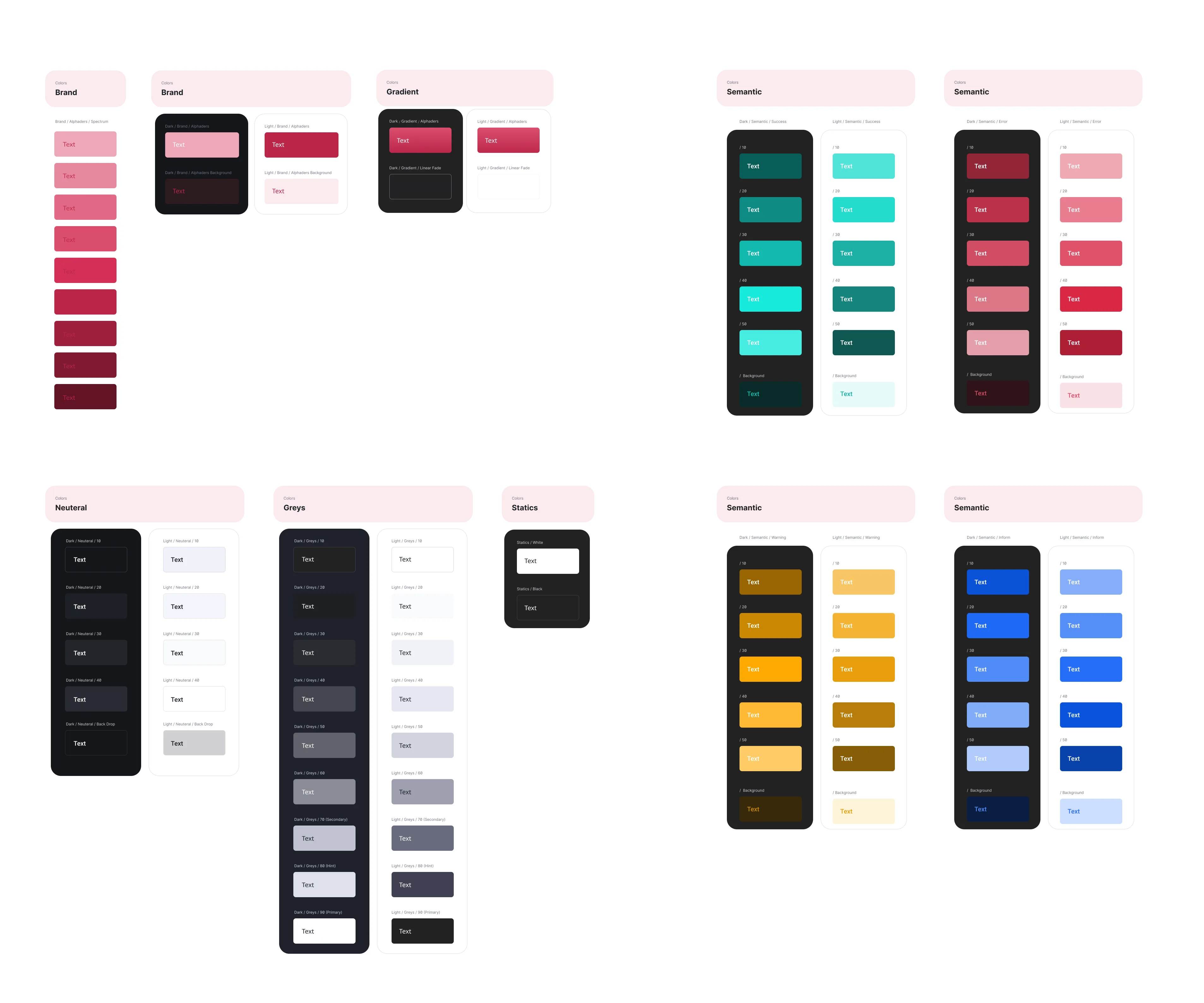
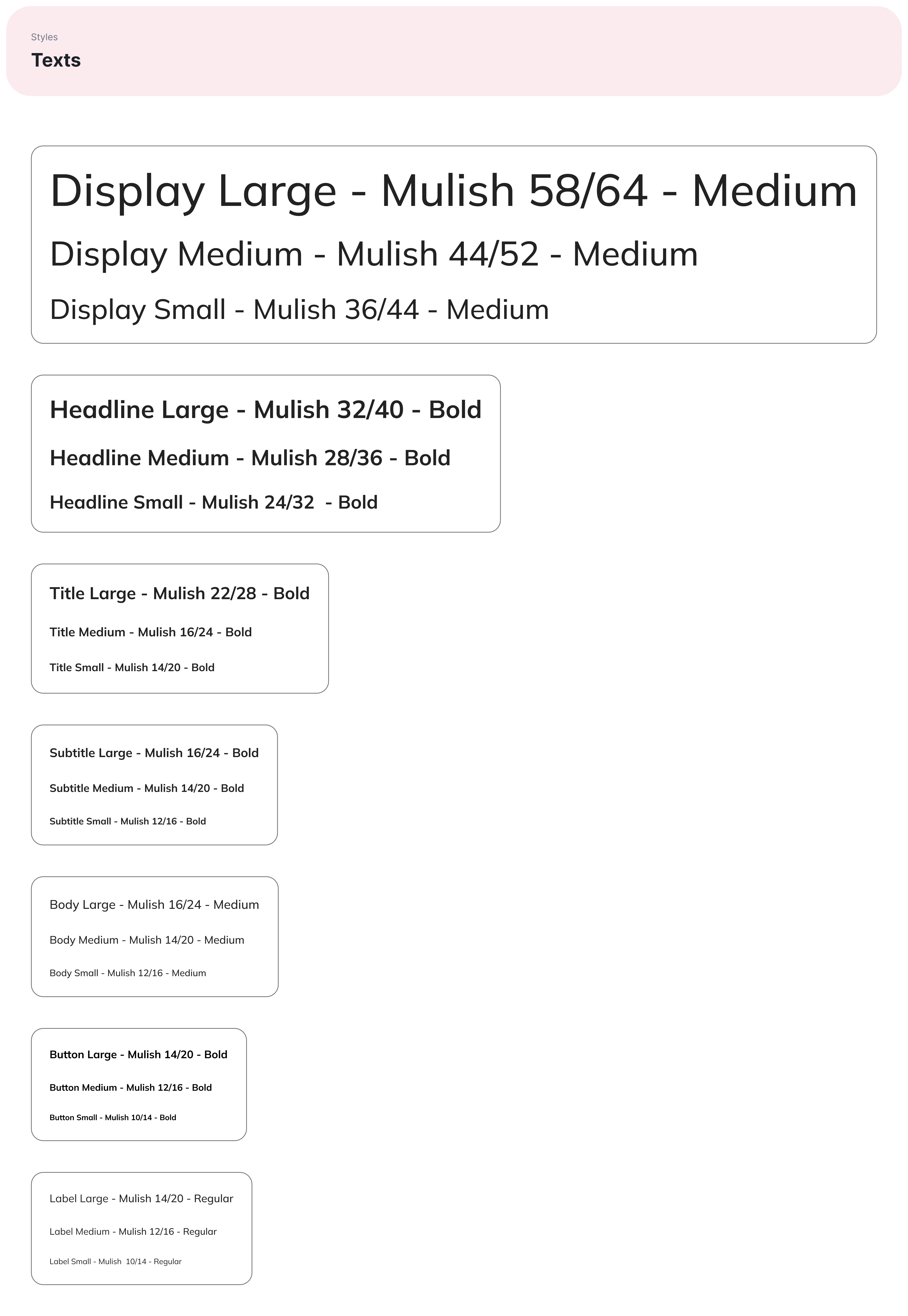
Typography Framework: Muli Font System across 7 categories:
- Display
- Headline
- Title
- Subtitle
- Body
- Button
- Label
Each with size variations: small, medium, large
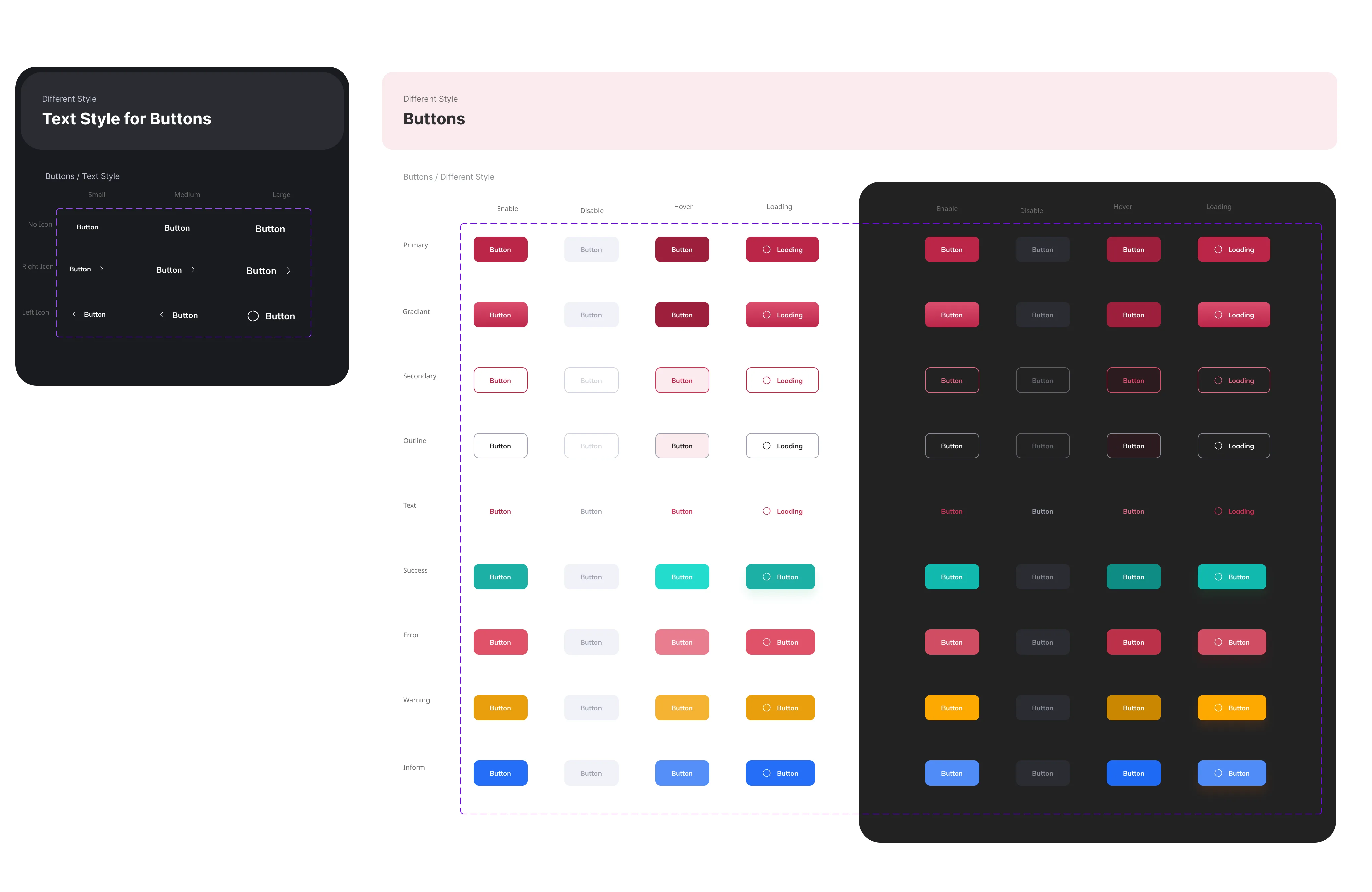
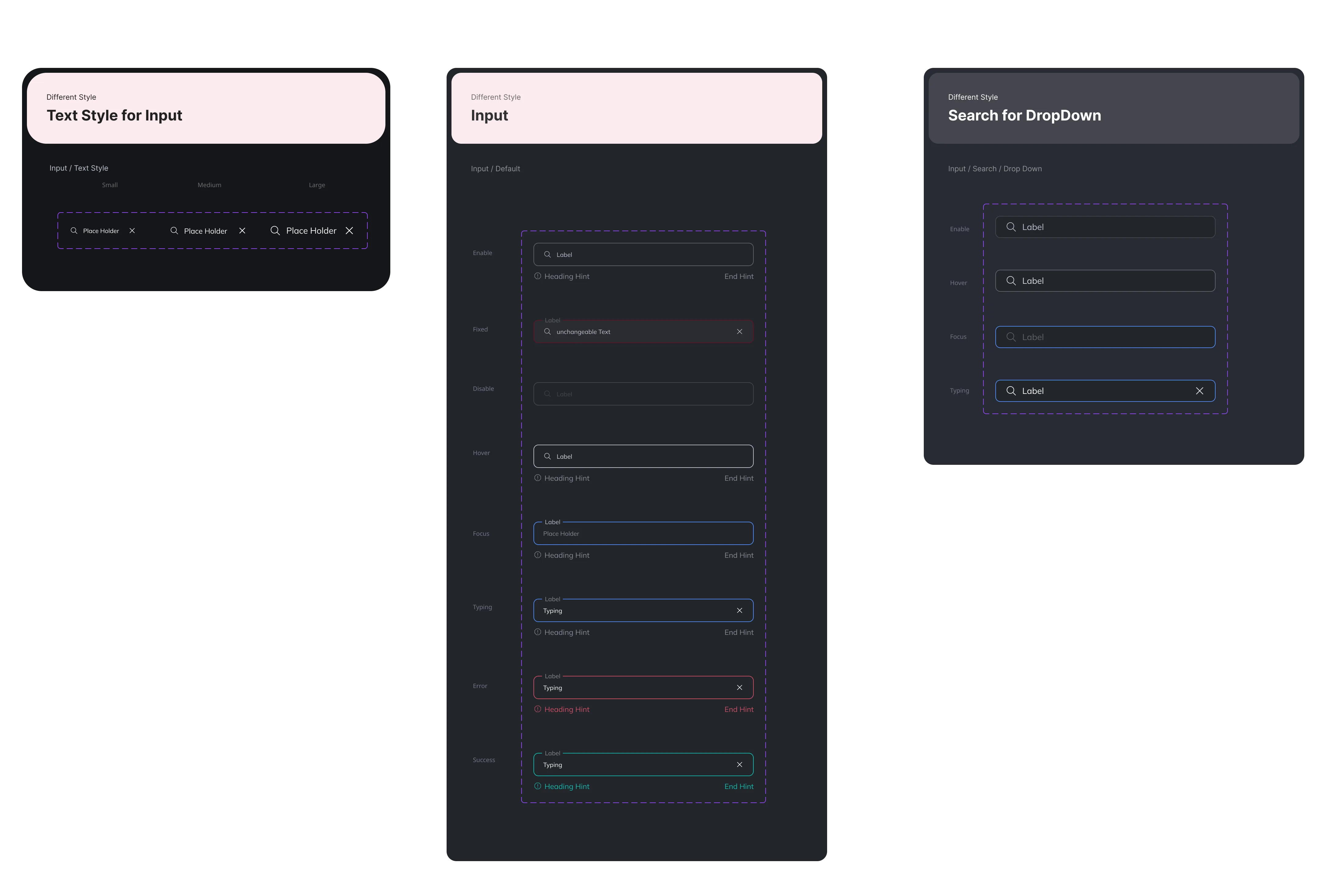
Component Library: Created atomic elements:
- Buttons
- Text inputs
- Switch toggles
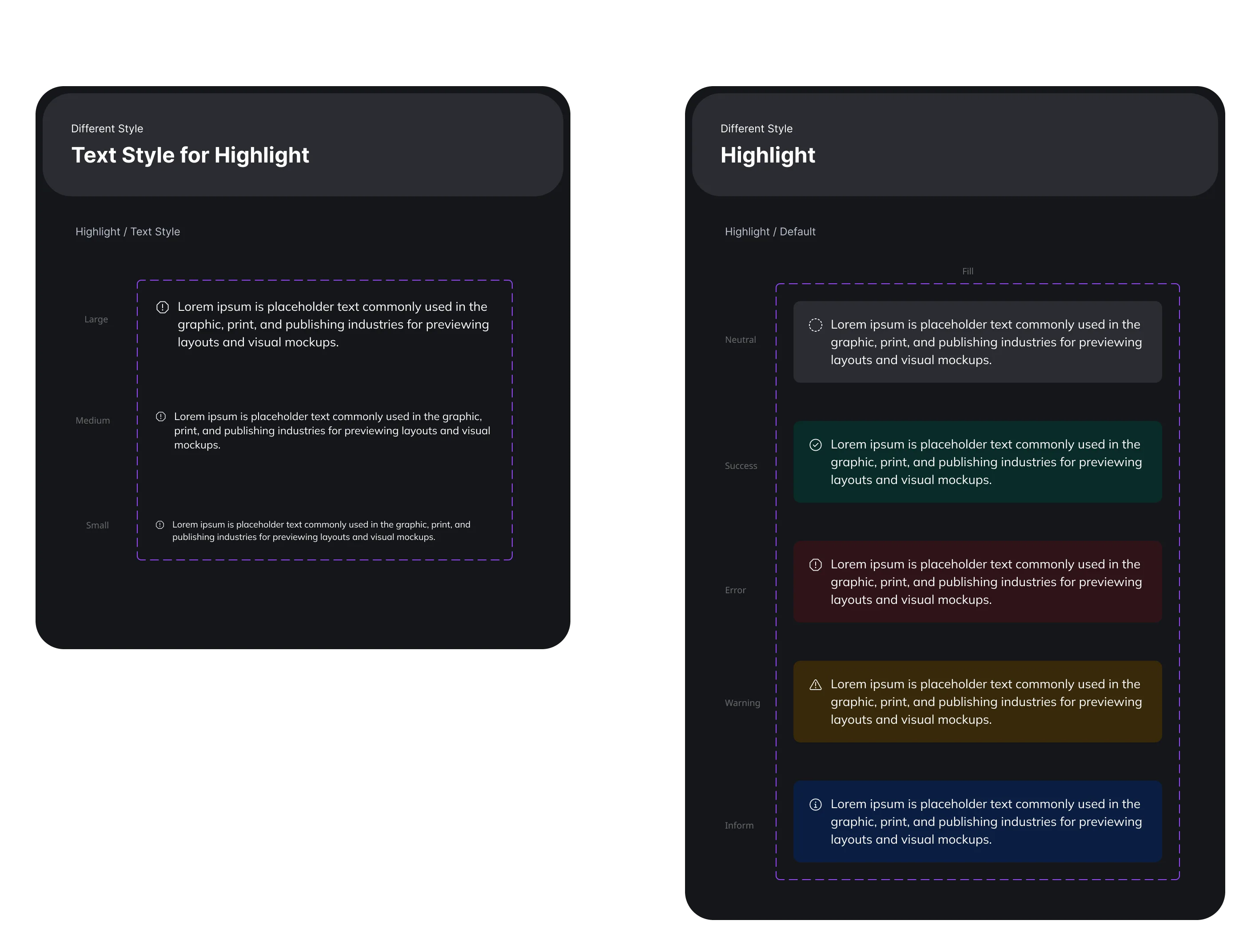
- Alert systems
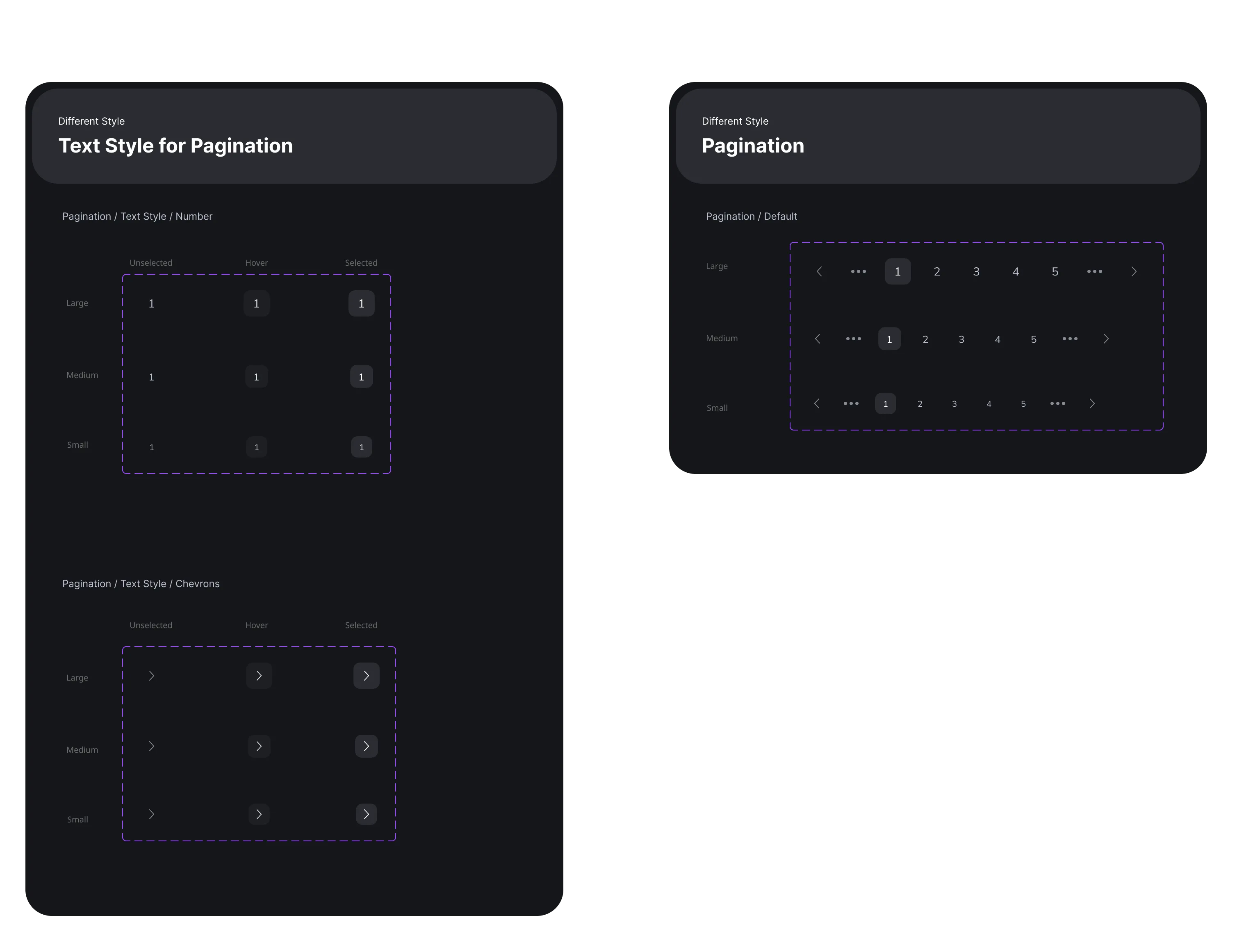
- Pagination controls
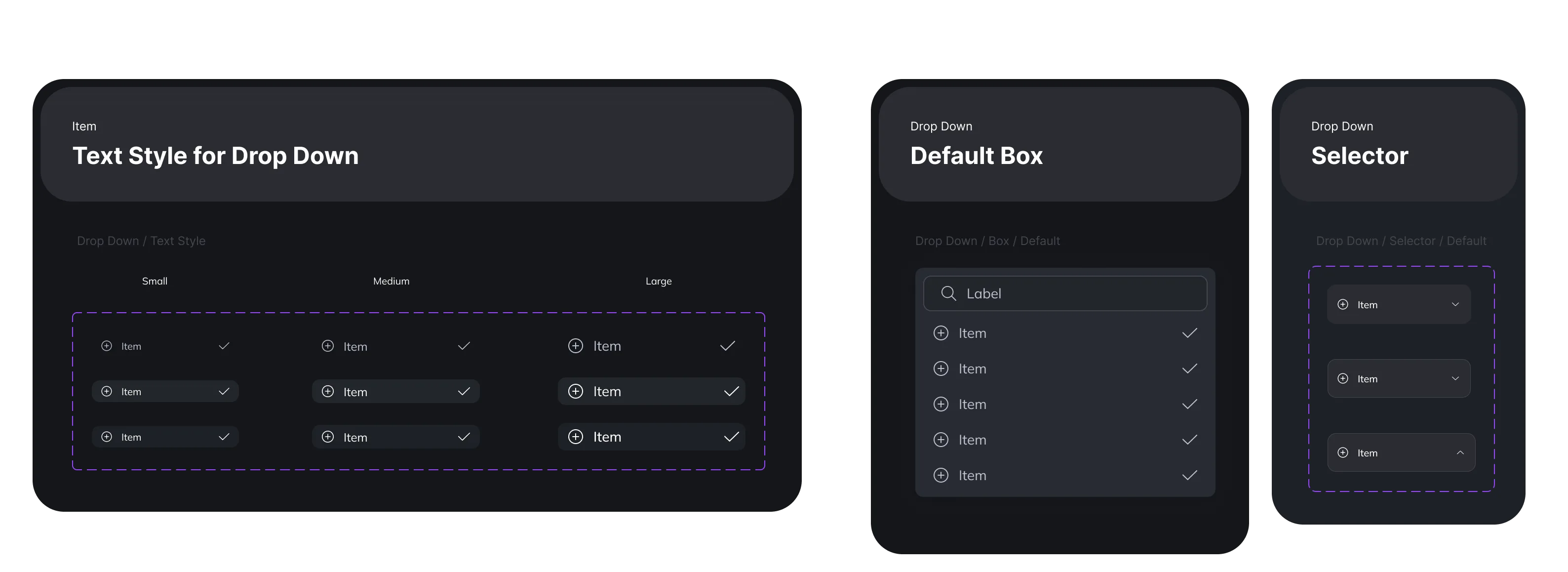
- Dropdown menus
- Breadcrumb navigation
- Menu structures
- Footer components
- App bars
- Tab systems
These foundational elements formed the building blocks for larger, product-specific components based on our wireframes.
Tournament Detail Page: One Page, Many Stories
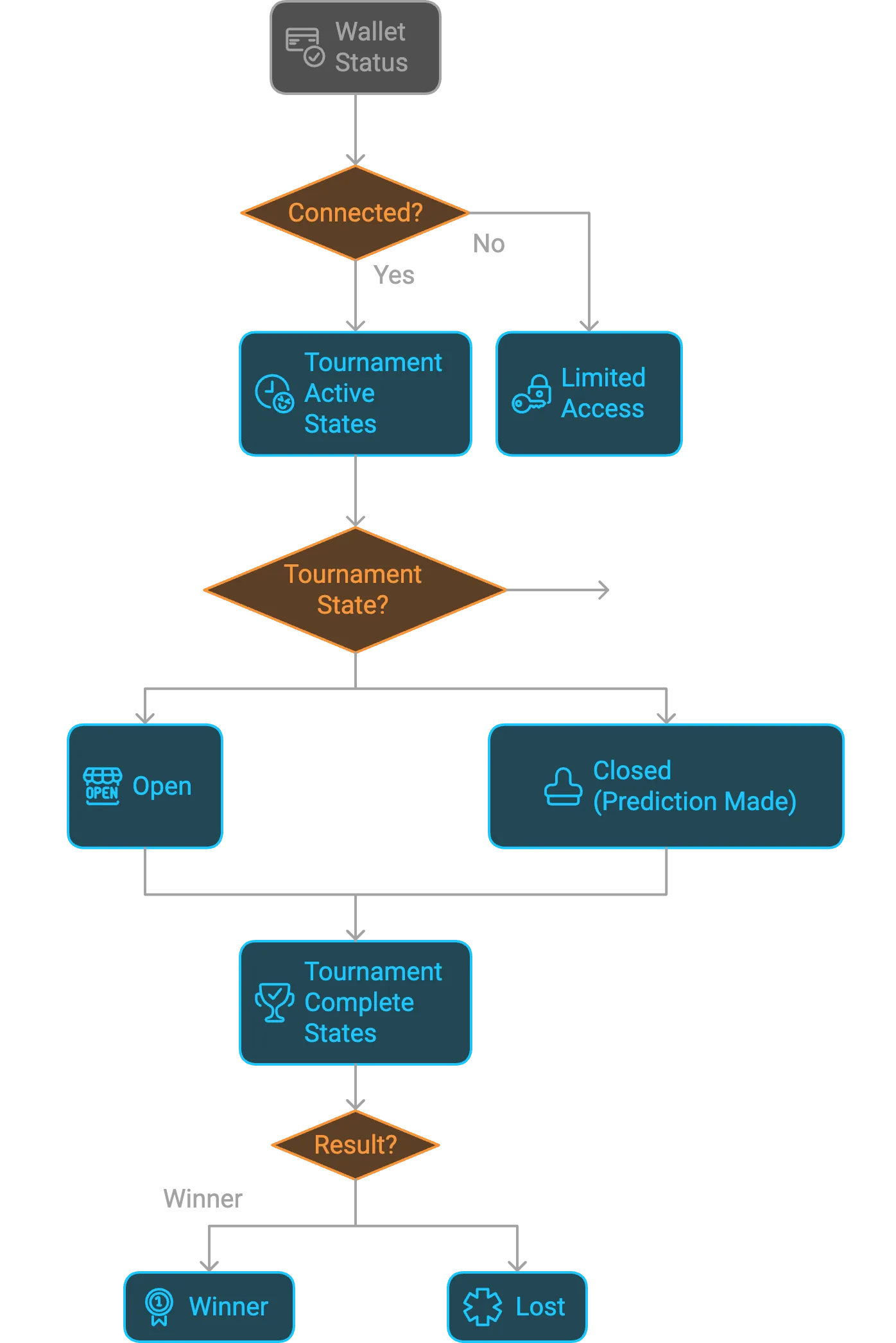
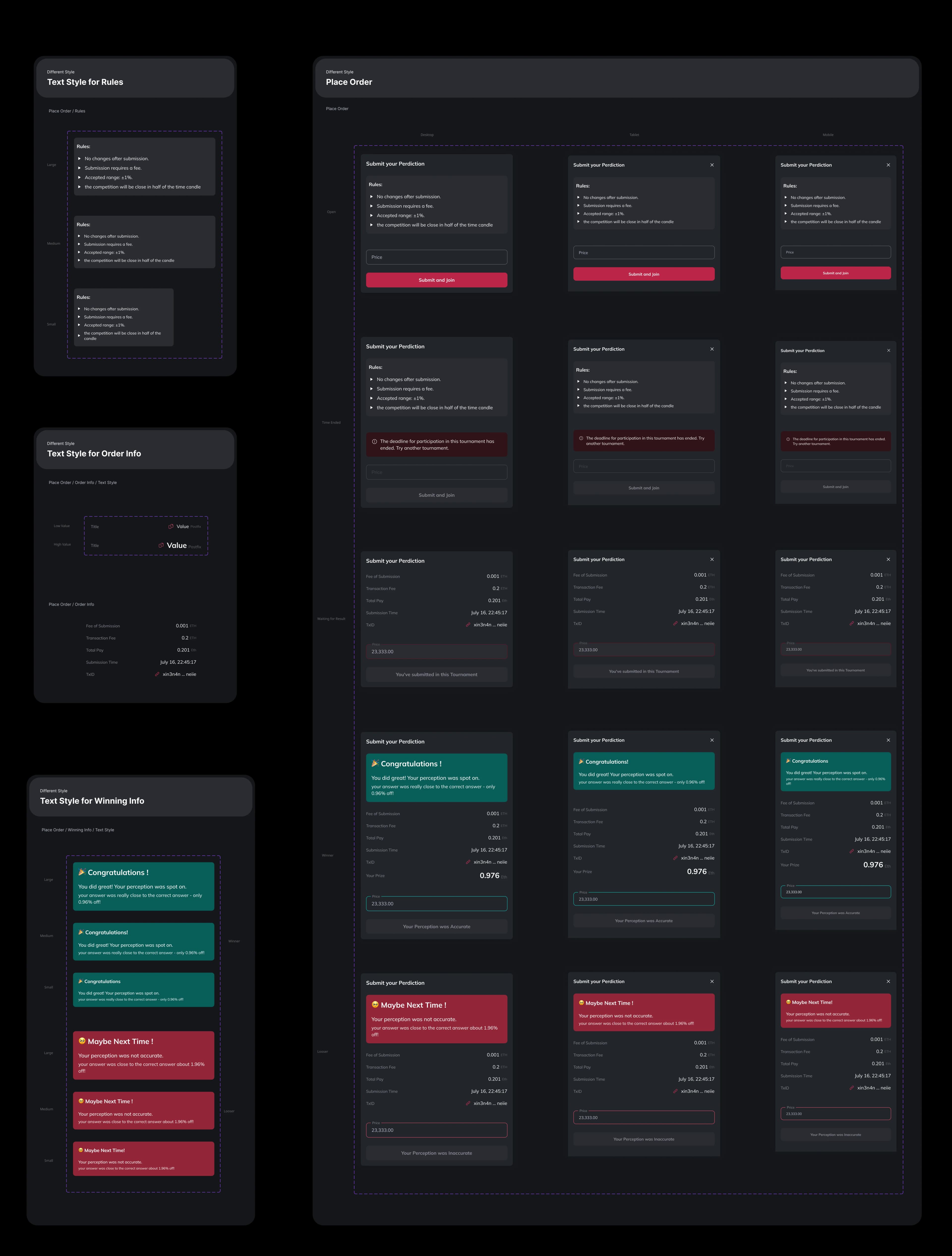
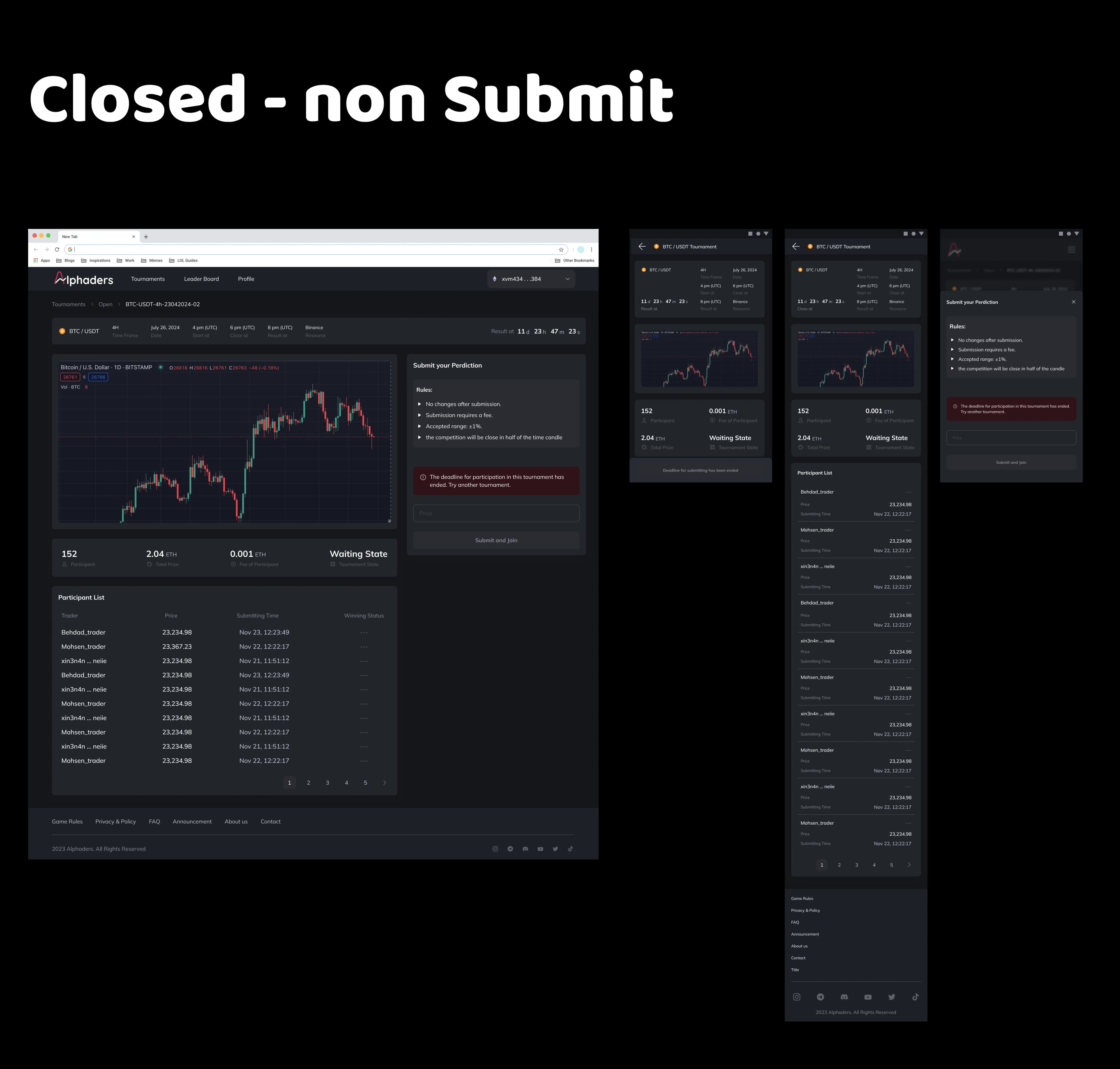
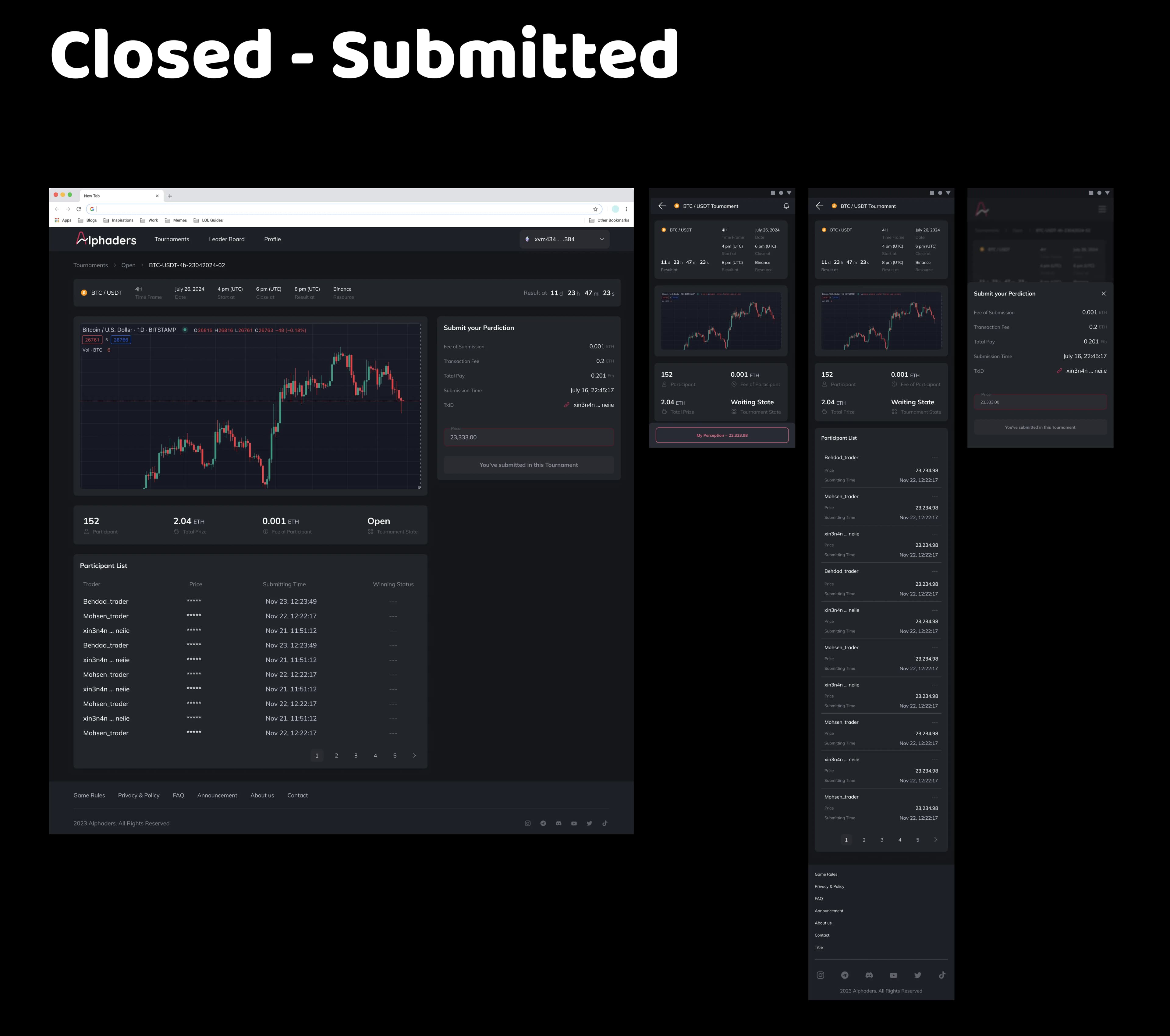
What appears as a single page to users actually represents one of our most complex design challenges. The Tournament Detail page needed to gracefully handle six distinct states while maintaining consistency and clarity across devices.
The State Matrix Story: Each user journey through this page could take multiple paths, requiring careful consideration of every possible scenario:
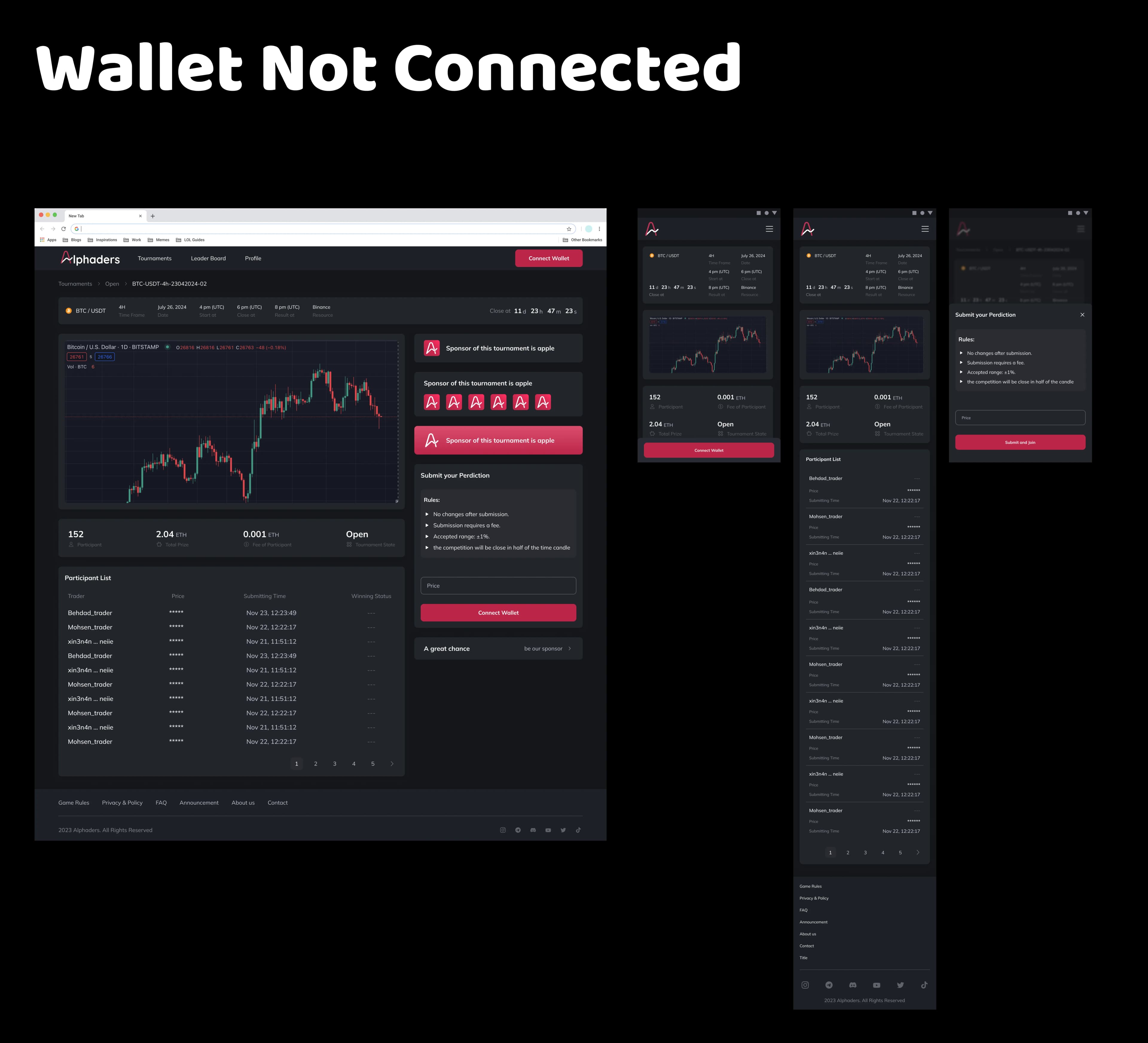
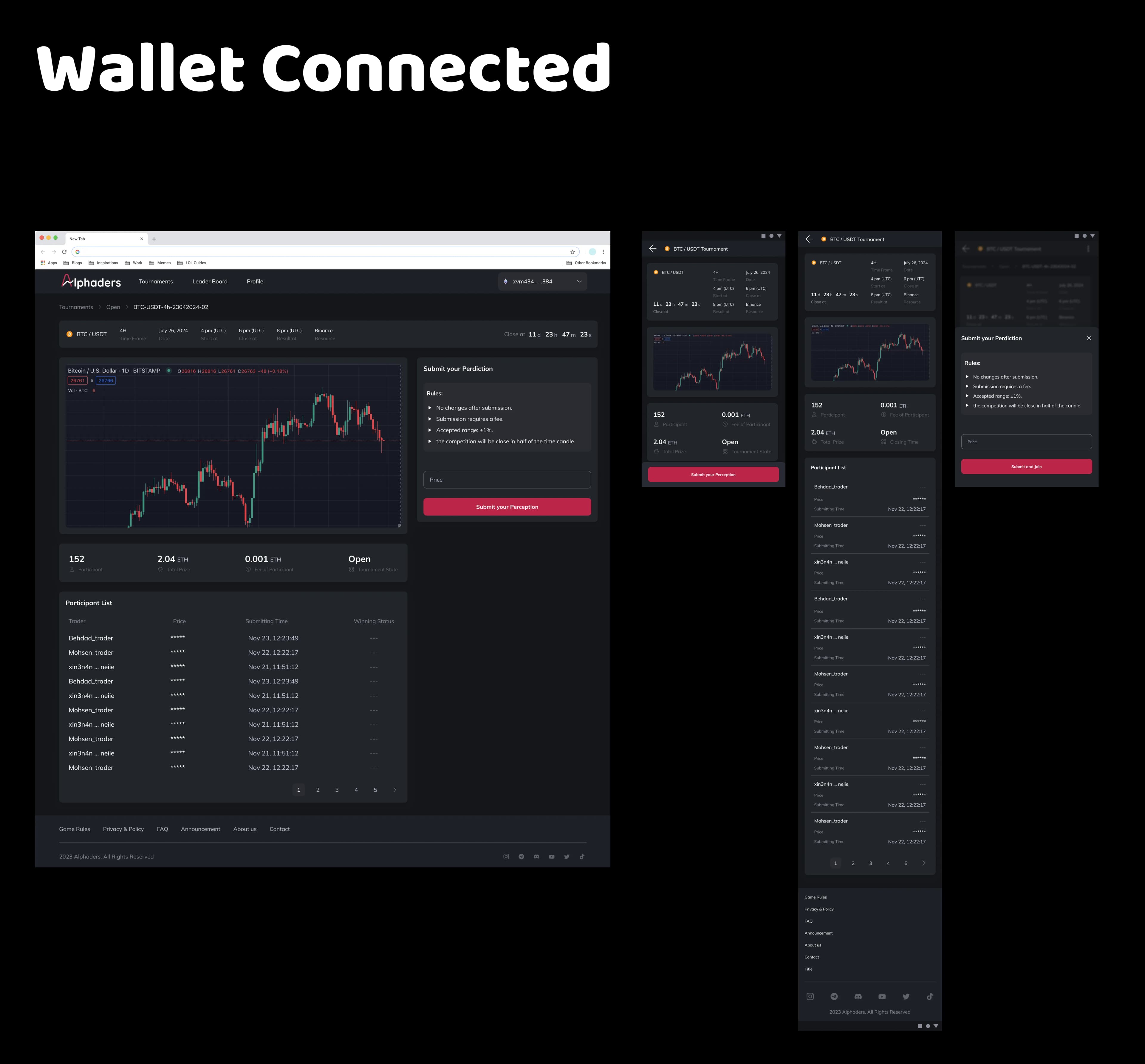
- Wallet Connection States:
Connected Experience:
- Full feature access
- Live prediction capabilities
- Prize pool visibility
- Participation status
Not Connected:
- Tournament Status Variations:
Active Tournament:
- Live prediction interface
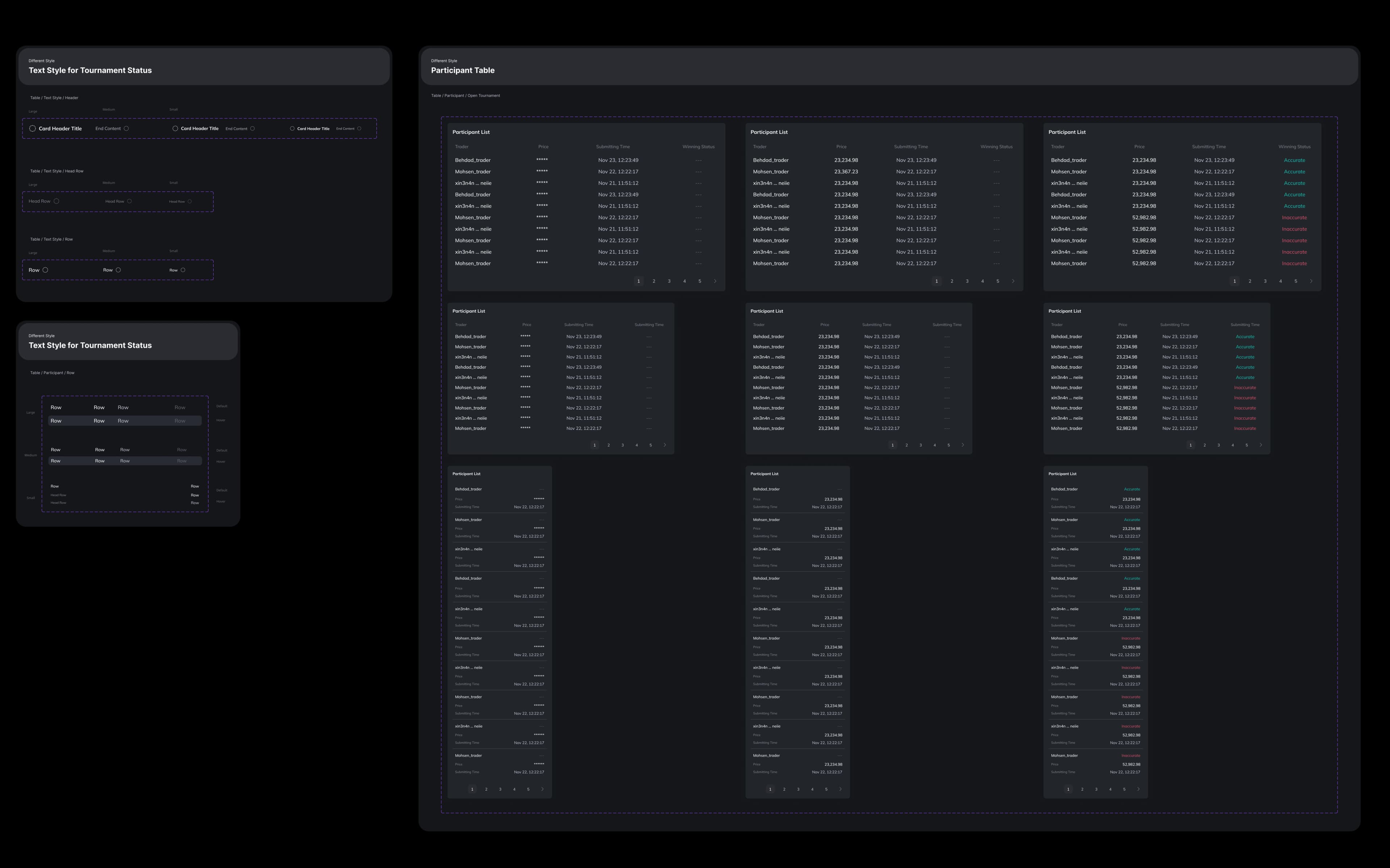
- Current participant list
- Real-time pool updates
- Countdown displays
Closed Tournament: Without User Prediction:
With User Prediction:
- Tournament Results:
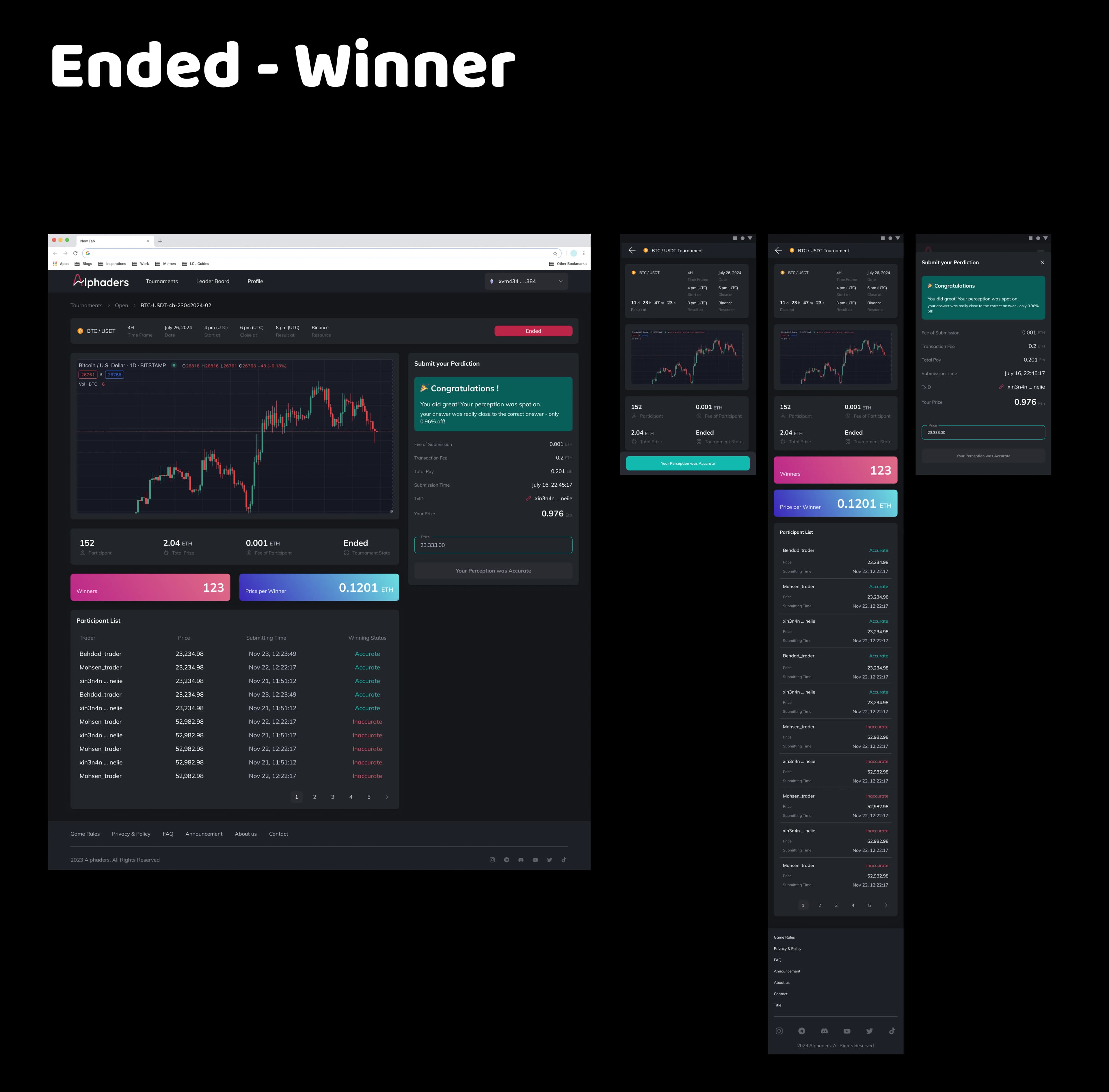
Winning Scenario:
- Victory celebration elements
- Prize claim interface
- Performance statistics
- Share capabilities
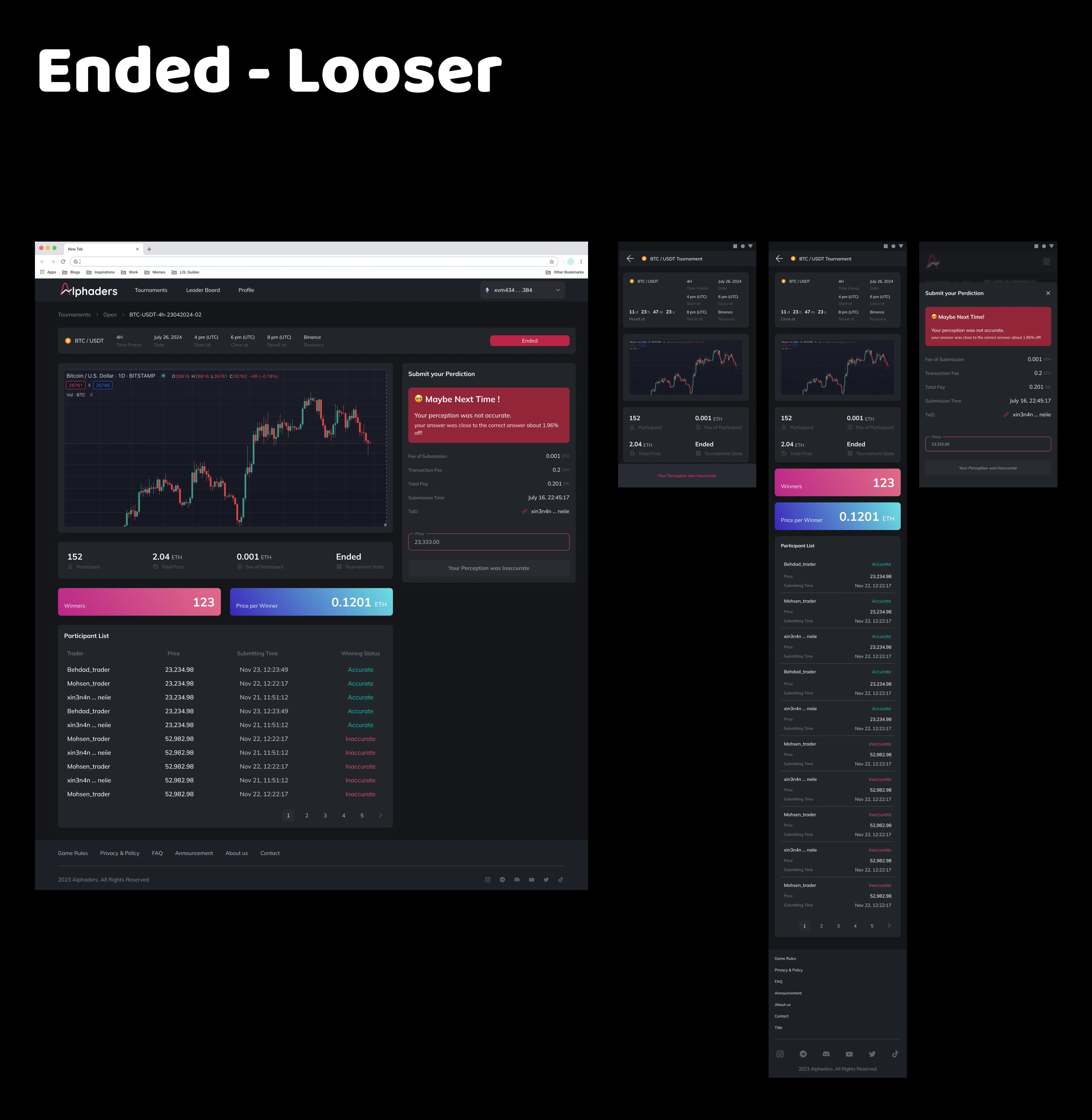
Loss Scenario:
Design Approach:
- Created master component for base structure
- Designed responsive layouts for desktop/mobile
- Built modular participant table states
- Implemented consistent state indicators
Component Architecture:
- Base template structure
- State-specific overlays
- Dynamic content areas
- Responsive adjustments
- Status indicators
- Participant table variations
Design in Action: Key Interface Examples