Khazai Rugs: The Digital Makeover
Khazai Rug Cleaning, a specialized rug care service provider in Louisville and Lexington, approached us with a critical business challenge: their existing website was underperforming with high bounce rates and low conversion rates. The company offers premium services including professional rug cleaning, pet stain removal, and expert carpet repair and restoration. My task was to investigate the root causes of poor website performance and develop a new design strategy that would effectively showcase their craftsmanship while improving user engagement and conversion rates.
Finding the Gaps: Analytics Deep Dive
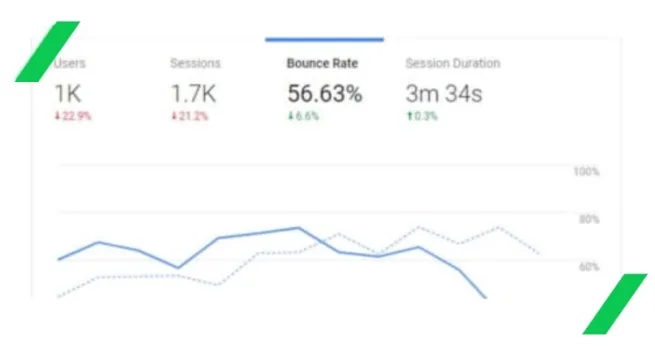
To identify conversion bottlenecks, I implemented a comprehensive analytics strategy utilizing both Google Analytics and Yandex Metrica. The data revealed a critical issue: the homepage was failing to engage visitors, with bounce rates fluctuating between 60-80%. This meant approximately 70% of potential customers were abandoning the site shortly after landing, indicating significant issues with initial user engagement.
Key Metrics Identified:
- Average bounce rate: 70%
- Primary drop-off point: Homepage
- Low user retention time
- Poor conversion performance"
Or if you prefer a more concise version:
"Through strategic implementation of analytics tools, we uncovered a critical insight: the homepage was losing 70% of visitors shortly after arrival, signaling an urgent need for redesign focused on user engagement and retention.
Heat Maps Tell All: UX Pain Points
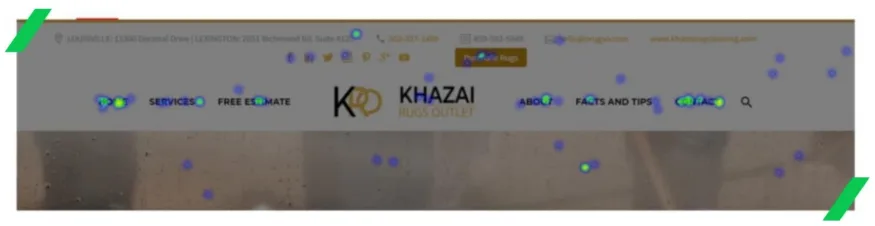
Heat map analysis exposed four major usability issues hampering the website's effectiveness:
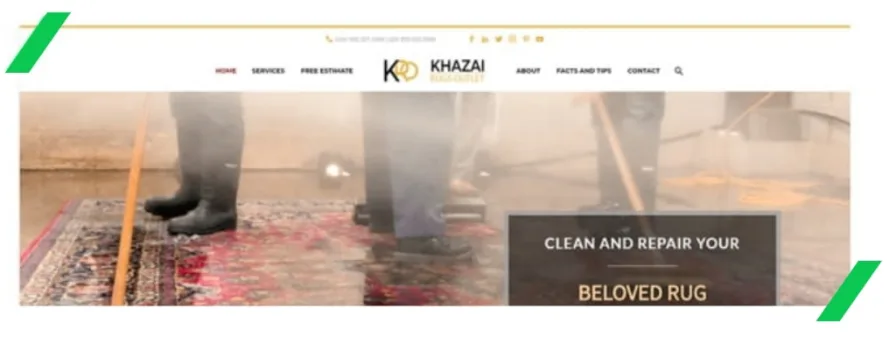
- Navigation Confusion: Users repeatedly clicked the 'Home' button while already on the homepage - a clear indicator of disorientation in the site's navigation structure and current page indication.
- Premature Contact Attempts: High interaction with the 'Contact Us' button revealed that users were unable to find or understand service information, forcing them to seek direct communication prematurely.
- Unclear Contact Information: Essential contact details lacked visibility and clarity on the homepage, creating unnecessary friction in the user journey.
- Misleading Primary CTA: The prominent 'Purchase Rug' button, positioned as the main call-to-action, was actually directing users to a separate e-commerce site - a significant source of user confusion and potential trust erosion."
Or more concisely:
"Heat map data revealed critical UX failures: confusing navigation, unclear service information, hidden contact details, and a misleading primary CTA that directed users away from the service platform to an unrelated e-commerce site.
Following the Flow: User Behavior
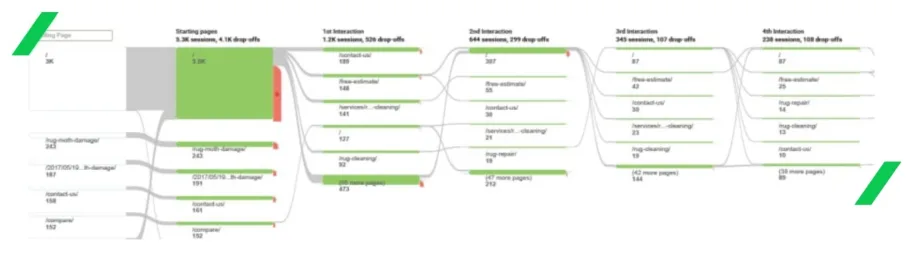
In-depth behavioral analysis and performance testing revealed critical insights about user patterns and technical barriers:
User Flow Analysis:
- Confirmed critical homepage bounce rate issues
- Identified clear service priority hierarchy based on user interest:
- Rug Cleaning (highest demand)
- Pet Stain Removal
- Rug Repair
- Rug Padding
- Rug Appraisal
- Rug Storage (lowest demand)
Technical Performance: GTmetrix analysis exposed severe performance issues, with homepage load times reaching 14 seconds - a significant contributor to the high bounce rates and poor user retention."
Mapping Emotions: The Customer Journey
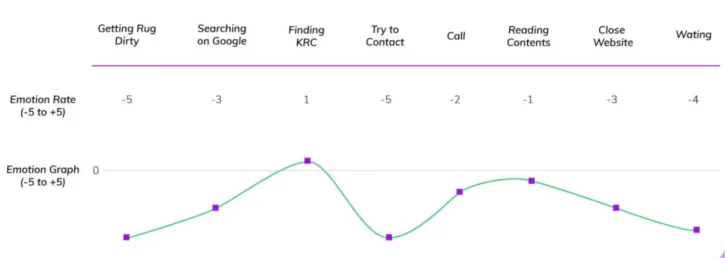
Without direct user interviews, I developed an evidence-based Customer Journey Map utilizing existing analytics data and demographic insights. This 'As-Is' journey map visualized user emotional states across different touchpoints of the website experience, highlighting critical moments of frustration and engagement. The mapping exercise revealed key pain points and emotional dips in the user journey, providing crucial insights for our redesign strategy. By tracking emotional patterns across each webpage and interaction, we identified vital areas requiring immediate improvement." Or more concisely: "Created a data-driven Customer Journey Map to visualize user emotional states throughout their website experience, revealing critical pain points and opportunities for enhancement despite limited direct user feedback.
Building Bridges: The Consultation Solution
Based on journey map insights, we identified users' strong preference for direct communication. Our solution centered on implementing an immediate engagement strategy:
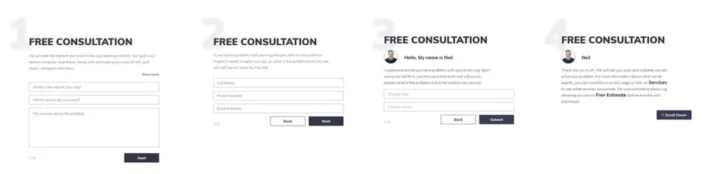
Key Solution: Automated Consultation System We designed a prominent 'FREE CONSULTATION' feature at the top of the homepage, creating a clear pathway to service engagement. This system:
- Captures specific user needs upfront
- Collects essential rug details and service requirements
- Gathers user availability for home visits
- Enables proactive follow-up calls from service team"
Testing the Waters: Predictive Analysis
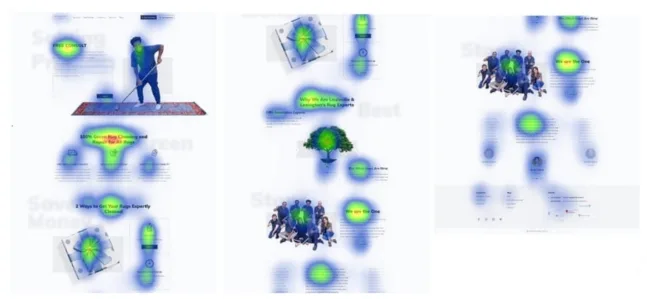
Before implementation, we leveraged the Visualeyes bot to generate predictive heat maps of our new design. This proactive testing approach allowed us to:
- Identify potential user attention patterns
- Discover areas needing enhanced clickability
- Validate placement of key interactive elements
- Refine navigation paths to align with user goals
This predictive analysis helped us optimize element placement and interaction design before live deployment, ensuring a more intuitive user journey."
Local Trust: The Family Factor
A crucial insight emerged from our stakeholder reviews and user interviews: we had overlooked a significant cultural nuance in the Lexington and Louisville markets. These communities strongly favor family-owned businesses over newer enterprises.
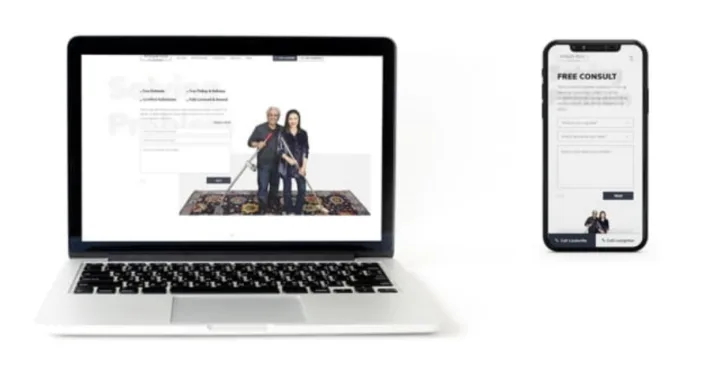
Critical Finding: Our initial hero image featuring a young professional unintentionally conflicted with local trust signals. The solution was straightforward yet impactful: we revised the website's imagery to showcase the older couple who owned the business. This authentic representation:
- Enhanced emotional connection
- Strengthened local trust
- Highlighted the family-business aspect
- Improved brand loyalty"
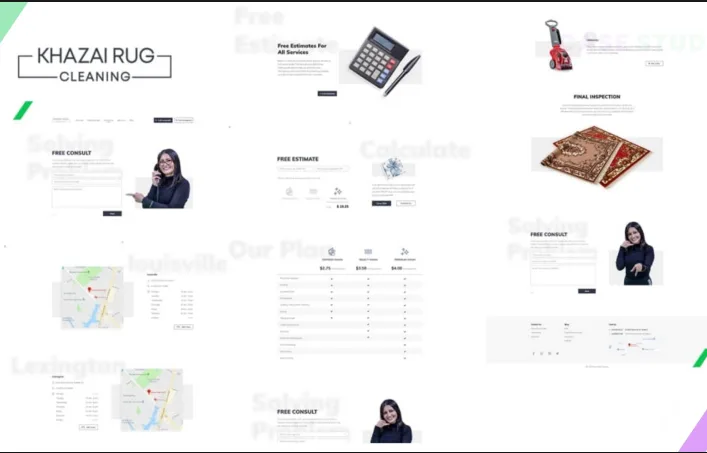
Design in Action: Key Interface Examples